How Warranty, Repair, and Resizing Shape the Value of Custom Fine Jewelry
Why Warranty, Repair & Resizing Matter for Custom Items (custom-made fine jewelry)
Buying custom or made-to-order fine jewelry is a luxury purchase and also an investment. Since custom-made jewelry combines hand finishing, unique setting designs, and often difficult-to-assemble joinery — all of which can have a big impact on post-purchase support, such as clear warranty terms, reliable jewelry repair, and consistent sizing — these aspects together form a key component of a consumer's peace of mind.
The importance of what U.S. customers want to know about warranties, repairs and resizes
When U.S. consumers inquire "What is the warranty, repair or resize offered for custom jewelry?" they are essentially asking for the same four things:
- What does the warranty actually cover? How long does it last?
- Does it cover accidents or loss?
- What is the process for repairing my jewelry and how long does it take?
- Are there any fees associated with resizing?
Research and industry guidelines indicate that: a) A limited warranty will typically only cover manufacturing defects and/or workmanship for a specific period of time, and b) Many consumers assume a retailer has an explicit resize policy (some retailers provide a free resize time frame while others may restrict resizing).

CJD Fine Jewelry Warranty Policy, Repairs Responsibility and Sizing Rules
CJD Fine Jewelry offers a one-year limited warranty for all custom orders. As such, CJD will repair any defects that are caused by manufacturing or workmanship (for example, structural failure of metalwork, loose or missing prongs due to improper tightening during the assembly process) at no cost to the customer. However, CJD will charge the customer for repairs that were caused by the customer (for example, dropping jewelry causing damage), from exposure to chemicals such as bleach or ammonia, or from unauthorized third parties (for example, another jeweler). This approach is a common business model among fine jewelers in the United States who use warranty language to differentiate between manufacturing defects and insured loss or damage to the jewelry.
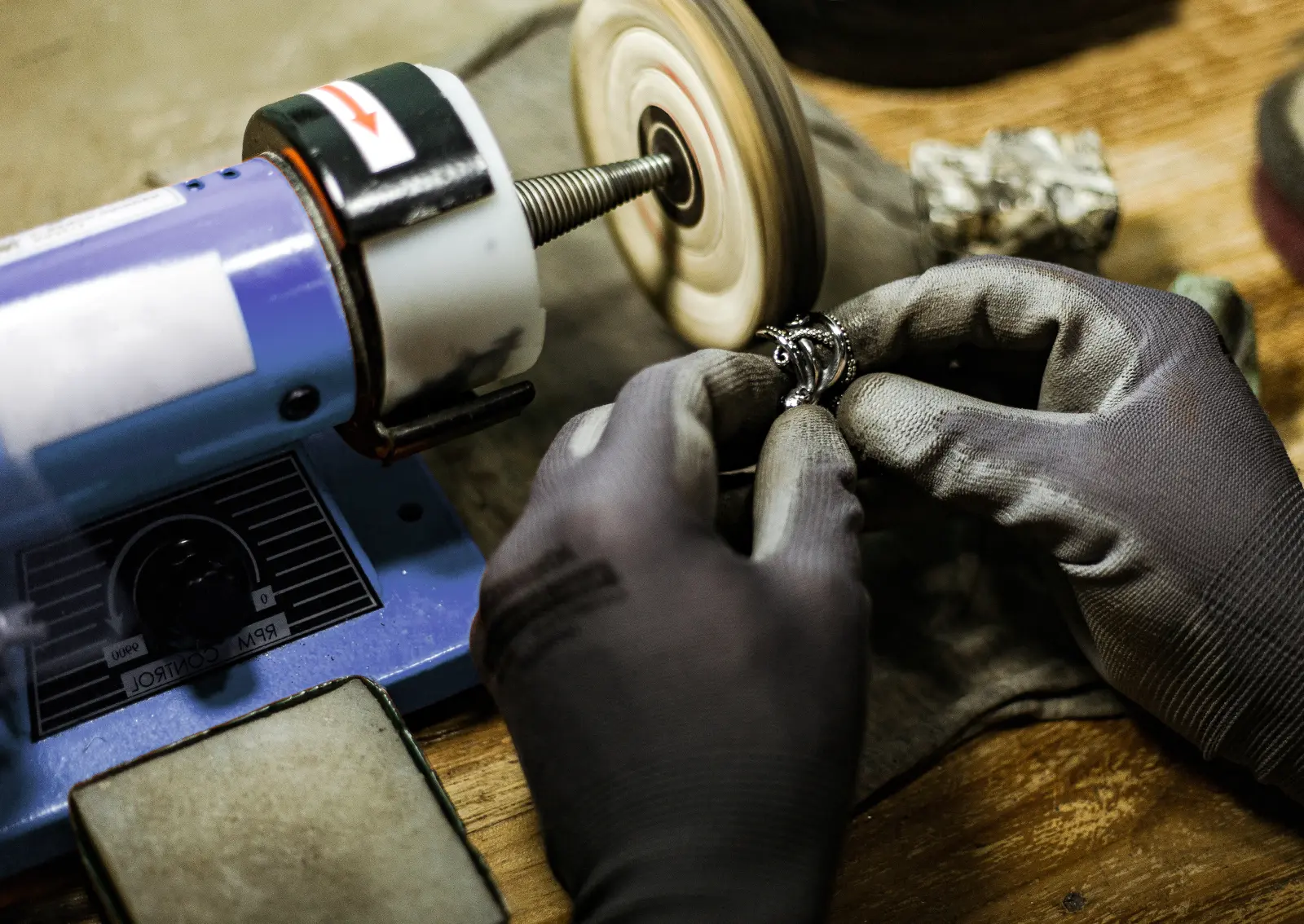
Regarding sizing: CJD allows for free sizing as long as the piece is still being manufactured (for example, prior to completion and shipment of the finished piece). Once the piece has been delivered to the customer, resizing is a service repair and will be done at the customer's expense. This is because many of the final-stage processes (for example, stone setting, polishing, plating, internal comfort shaping) cannot be undone without causing additional labor or risk to the setting. This policy mirrors most retailers' approaches to limiting free sizing to specific windows of time.
Repair Process and Realistic Timelines
A repair process that is transparent will minimize conflict and establish expectations. CJD's repair process typically follows this logical flow:
- Initial client contact and description of the problem,
- Diagnostic inspection (either in the studio or through receipt of the piece via secure shipping),
- Confirmation whether the issue falls within the warranty,
- Issuance of a written quote if the repair is charged to the customer,
- Authorized repair, and
- Final quality check and return.
While U.S. turnaround times for complex repairs vary widely — for example, repairing or replacing a shank, resetting stones, or replicating artisan details — the average time frame is approximately 1–4 weeks depending on parts availability and workload; simple repairs (for example, re-tipping prongs, replacing clasps) may occur more quickly. Therefore, CJD customer communication regarding expected turnaround times should identify realistic time frames and any possible expedited service (for a fee).
Practical Guidance, FAQs and Closing Considerations
Practical guidance for CJD clients (and valuable information for customer-facing materials) includes:
- Keep receipts and any certifications;
- Do not permit any third-party servicing while the warranty is active;
- Consider purchasing insurance to protect your valuable pieces against theft or loss (most warranties do not cover loss or theft);
- Schedule regular inspections if you wear your jewelry regularly — most retailers recommend annual inspections to ensure warranty eligibility.
Clear examples of FAQs include: "Does the warranty cover lost stones?" Typically, no, unless the loss occurred as a result of a documented manufacturing defect; "Is routine cleaning included?" State whether basic inspection/cleaning is part of the service or available as a paid option. These types of practical explanations eliminate misunderstandings and increase long-term client confidence.
Closing
Warranty, repair, and resizing policies are not just afterthoughts for collectors and clients of fine, custom-made jewelry. Rather, they are a major component of the product's overall value proposition. CJD Fine Jewelry's one-year limited warranty on all custom pieces, repairs by CJD for manufacturing defects, and clear resizing policy while pieces are in production reflect a reasonable middle ground: protecting the client from errors made by the manufacturer while distinguishing those protections from insurance-level coverage for loss or negligence. When presented in a transparent manner, these terms build trust with the client — transforming aesthetic appreciation into lasting consumer confidence.

-Author’s Note-
Benjamin Hartley
To protect your investment in fine custom jewelry, you are required to do much more than simply preserve the look of your piece; you are required to protect its value and integrity. Each and every warranty, repair, and sizing policy at CJD Fine Jewelry represents the company's respect for craftsmanship and our clients' trust — protecting each individual, one-of-a-kind piece for years to come.
04 Comments

"Thank you for breaking down the difference between warranties and insurance. I find it refreshing that you stated that you will cover defects in workmanship but not damage due to chemicals. This gives me confidence that I am going to purchase a quality, long-lasting custom item."
Serena Holt

"Thank you for explaining the repair process and realistic timeline. I appreciated knowing that there is a 1–4 week average for repairing a piece of custom fine jewelry, as opposed to the vagueness of stating 2–3 weeks. Your ability to provide this level of detail is important to me since I am making an investment in custom fine jewelry."
Karen Vaughn

"The article provided some interesting insight into the world of resizing policies. The fact that free resizing is only available until shipment now makes sense to me. I will be sure to inquire about the resizing window when I place my next custom fine jewelry item with CJD Fine Jewelry."
Marcus Ellison
Leave a Reply
Contact us with any questions or replies — we’re always here to help.
"I am glad the article explained the free resizing window during the production phase — so if I approved the design today, and decided to resize after receiving the product, would I be charged? I just want to make sure I'm on track with the timeline prior to ordering my custom item."
Natalie Pierce