Transforming Personal Stones and Heirlooms Into Custom Jewelry: What U.S. Clients Need to Know
Quick Answer and Scope
Yes – Creating a one-of-a-kind piece using a client's stone, heirloom, or photographic reference is a common practice among modern ateliers; however, it comes with certain conditions. The determination is based on a number of objective variables (the durability of the materials, whether or not the client has documented the condition of the item, the legal status of the design) and on the use of a documented protocol for intake, gemological examination, and the scope of the work. The information contained in this article is based on industry best practices to give clients in the United States a general idea of what they will need to know before they hire someone to perform this type of work.
What Most Concerned Clients in the U.S. (Summary Based on Evidence)
Consumer surveys and trade advisories show five recurring themes of concern to U.S. clients:
- the technical suitability of the stone for resetting;
- the potential for damage to the stone during the process of removing or recutting;
- the necessity of obtaining an appraisal and documentation for the purpose of insurance and estate record purposes;
- realistic expectations regarding the timeframe and costs associated with a bespoke project; and
- limitations related to intellectual property when reproducing a third-party design.
These concerns dictate how intake processes and pricing structures are developed at premium studios. (CJD Fine Jewelry utilizes these checkpoints as part of its standard intake and design process.)
Assessments of Material Limits: What Professionals Test and Why
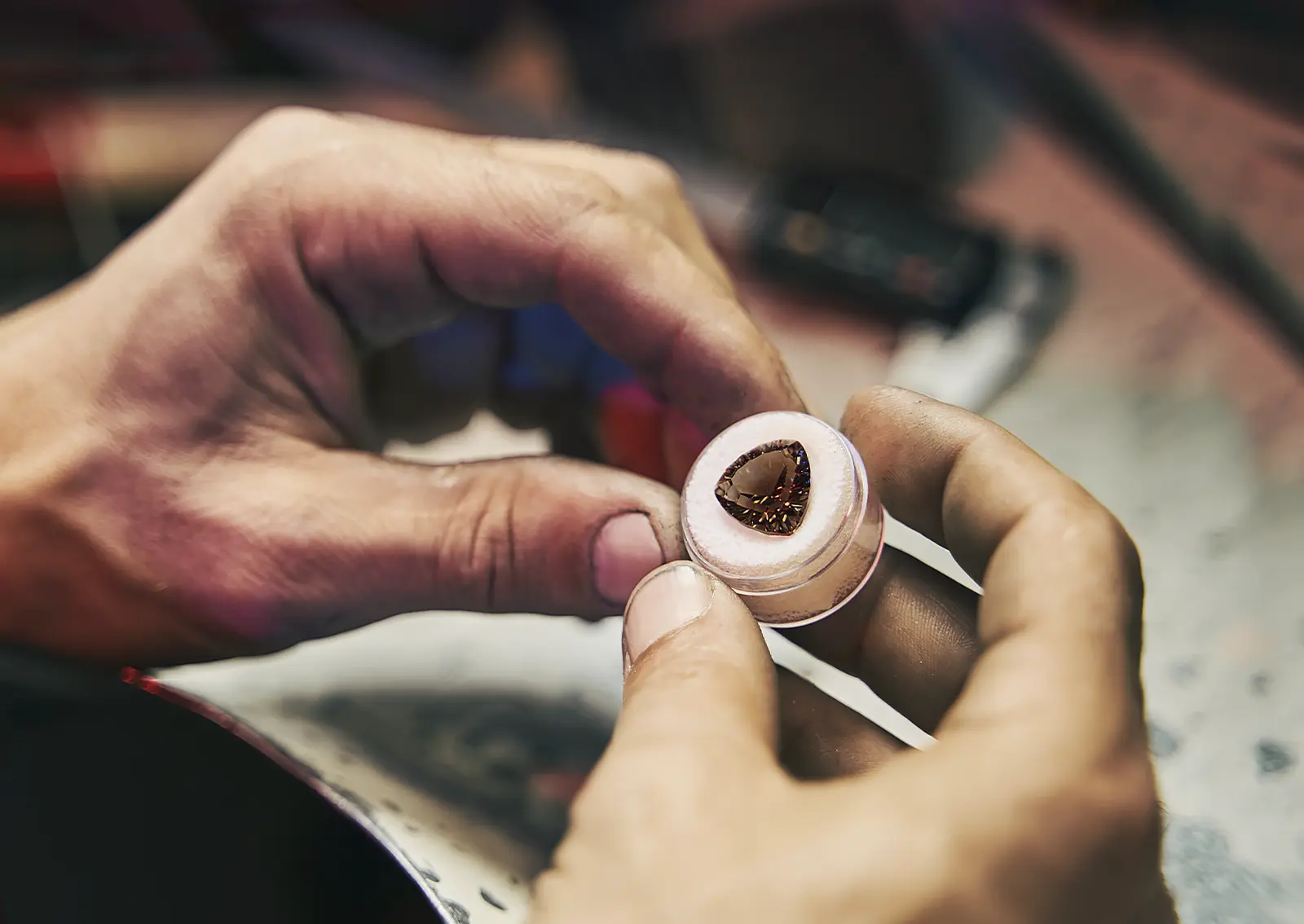
When an atelier provides a documented intake process, including photographic condition reports, measured weights, and non-destructive gem tests (hardness, refractive/ optic indicators, and evidence of treatment), professionals are able to determine whether or not the client's stone is suitable for re-setting. Authoritative guidelines list the appraisal elements — weight, cut, clarity, color, and treatment history — that are critical to establishing the value and the handling protocols of the stone.
Hard gemstones — diamonds, sapphires, rubies — are mechanically robust candidates for re-setting.
Soft gemstones — opals, turquoises, some emeralds, and pearls — are chemically or mechanically vulnerable, and therefore are often protected through bezels, guards, or restricted to low-wear applications (pendants, brooches) as opposed to rings.
If the stone is unstable, options include:
- reinforcing the stone through bezels or guards,
- utilizing the stone as an accent as opposed to a focal point, or
- retaining the non-gem components of the heirloom (metalwork) and replacing the centerstone.
Creating From a Photo: Fidelity, Process, and Legal Boundaries
There are two types of photo-based commissions:
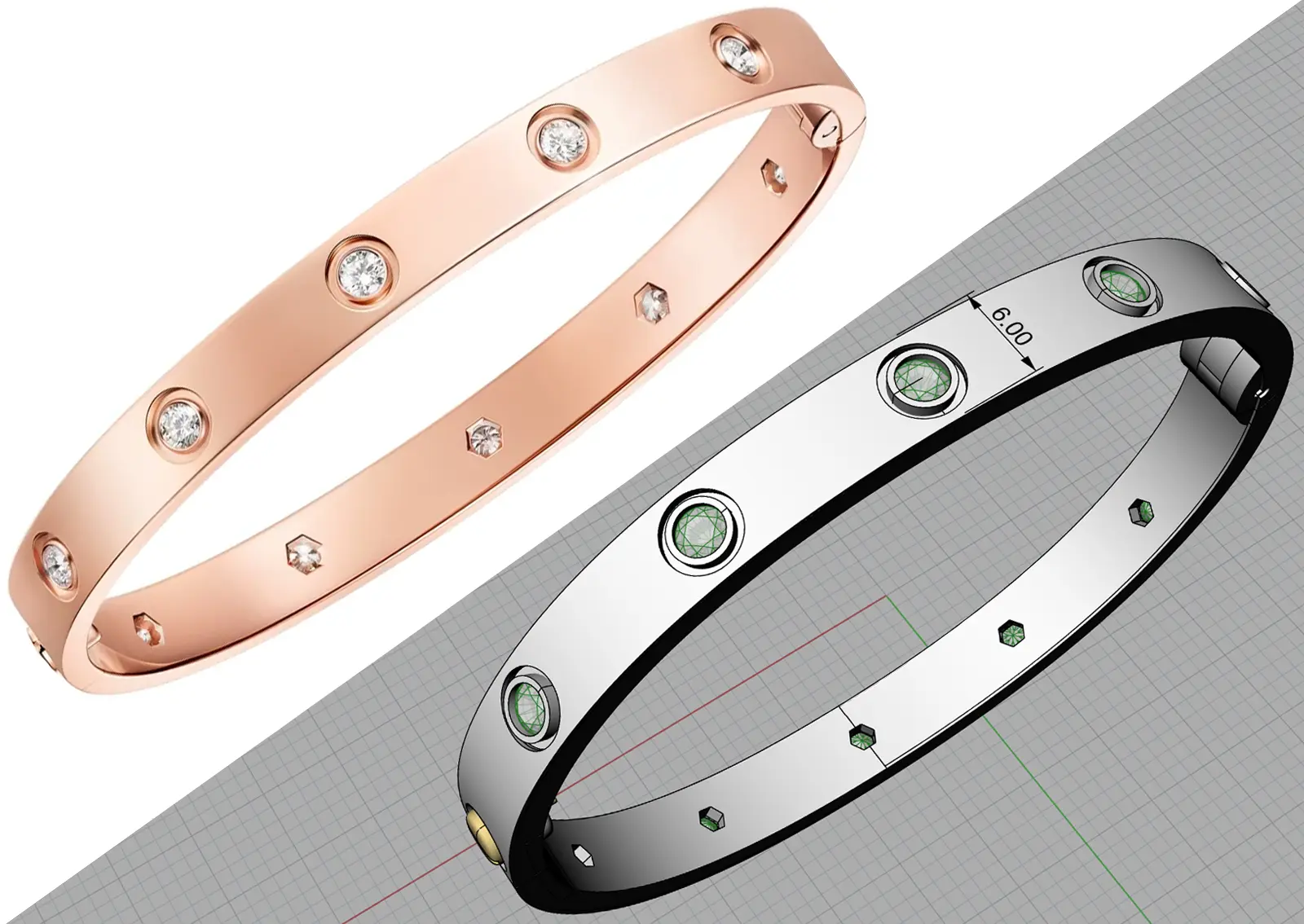
- A replica attempts to replicate the subject formally with a high degree of fidelity and requires high-quality, multi-angle photographs or access to the original subject. Even when those conditions are met, exact replication of the subject may be difficult to achieve due to unseen proportions or construction details.
- Inspired designs abstract motifs and produce an original work that captures the essence of the image without replicating it verbatim.
In the U.S., copyright law recognizes that certain jewelry designs may be protectable and accordingly, ateliers provide their clients with advice regarding copyright and trade dress risk, and will seek the client's written permission prior to reproducing a protected design. In the premium sector, projects which attempt faithful replication usually take between 6-8 weeks to complete, depending on the amount of time required to restore or re-cut the stone.
Work Flow, Timing, Cost, and Insurance Considerations
A transparent, bespoke work flow includes:
- Consultation and intake with condition documentation;
- Gemological testing and appraisal (if applicable for insurance);
- Design (Sketches and/or 3D rendering);
- Written Estimate and Client Consent;
- Fabrication and Setting;
- Delivery with Final Condition and Valuation Reports.
While using a client's stone may eliminate the raw material cost of a stone, the use of a client's stone may increase the labor associated with the project (stabilization, custom mounting, re-cutting) and therefore, the price of the finished product is not always less than purchasing a new stone. Clients should ensure that they have secured or updated their appraisal and insurance while the item is in the possession of the jeweler. Written Receipts and Photographic Condition Reports will help minimize dispute risk and are a standard procedure in reputable studios.
Conclusions
Converting a personal stone, heirloom, or photographic reference into custom jewelry is feasible and common within established bespoke practices; However, the conversion of a personal stone, heirloom, or photographic reference into a custom piece of jewelry requires empirical evaluation, thorough documentation, and — when reproduction of another artist's work is involved — legal due diligence. Clients who follow these safeguards can preserve both the sentimental and financial value of their jewelry while ensuring a smooth, predictable creative process.

-Author’s Note-
Lauren Hayes
Each heirloom has its own unique history — our role is to take that history and turn it into a lasting piece of jewelry. The process is not merely about craftsmanship; it is also about establishing a level of trust between client and craftsman, being precise in every step, and ensuring that the jewelry we create will be passed down through multiple generations.
05 Comments

“That’s really good information about insurance. I had given a jeweler a sapphire to reset and didn't have the appraised value current at that time — huge hassle when I tried to file a claim on the jewelry with my insurance company afterwards. I now know better!”
Harper Lindstrom

“Great article! What do you think is the limit on "inspired" design pieces and how much alike can they be to the original? For example, if I give a jeweler a picture of a vintage Cartier brooch, can they reproduce one that is very similar (if not identical) and still not run afoul of copyright law?”
Peyton Carver

“Even though I am providing the diamond, the cost of the final product may still be substantial due to the cost of labor — I thought that by using my own diamond, I would save money, however it appears that is not necessarily the case.”
Logan Beaumont

“I've been considering creating a ring from my late mother's pendant. I really like the idea of using the same metal in both the pendant and the ring and did not consider that previously.”
Mason Whitfield
Leave a Reply
Contact us with any questions or replies — we’re always here to help.
“I have my grandmother’s opal ring and was curious as to whether you could safely re-set it. It seems that opals are delicate so does a jeweler tell you if it is too risky to re-set before taking action on the ring?”
Grace McAllister