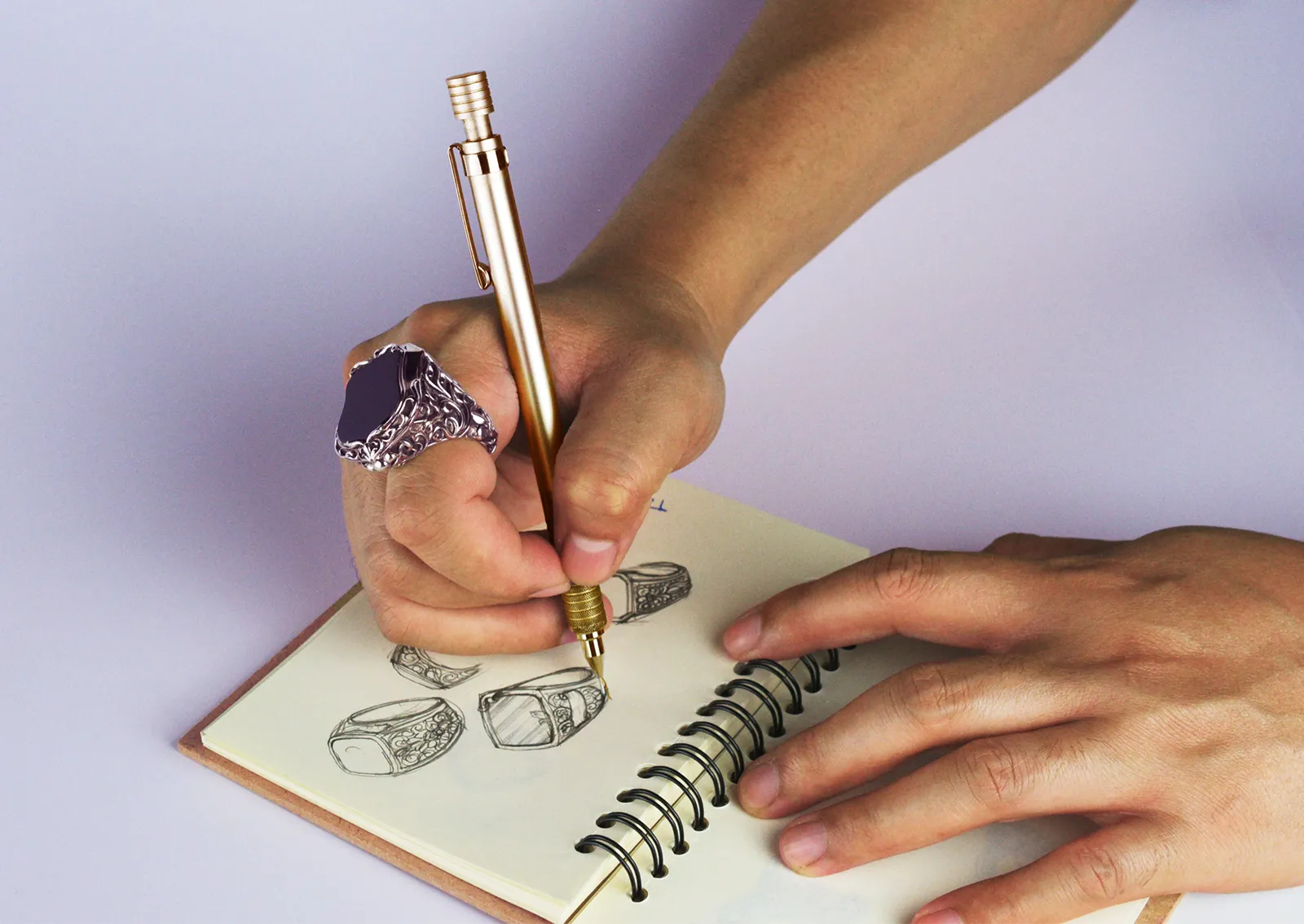
From Vision to Masterpiece: Understanding the Custom Jewelry Process
Jewelry begins as a problem to be solved — not as a ready-to-wear item. A custom jewelry customer comes in with both intention (to commemorate an occasion, to update an heirloom, to convey an aesthetic), the constraints of time, money and preference (e.g. budget, timeline, metals, allergies, etc.), and some form of reference (e.g. photos, sketches, other jewelry).
This first session (either in-person or online) will help to define those inputs as a clear and concise brief: purpose, approximate budget, preferred materials, and any non-negotiable technical constraints (e.g. ring size, stone durability for everyday wear, sourcing constraints, etc.). The earlier you have clearly defined documentation of the brief, the fewer changes there will be and the less likely there will be misunderstandings as the project develops. (There are a number of resources available that outline initial preparation and questions to ask your custom jeweler, including, but not limited to, FAQ's and Commission Guides.)
Budgeting and Material Selection: What Determines Cost
Cost formation in custom jewelry design work is determined by a few select areas of input: type of metal (gold vs. platinum), quality of the stone and origin of the stone, complexity of design (filigree and engraving require additional labor hours), and whether or not a customer has brought in existing stones or materials to be used in the piece.
Published trade guidelines and individual jeweler breakdowns of costs demonstrate a large band width of potential prices for bespoke jewelry: basic custom jewelry can begin in the low thousands, mid-range custom engagement rings usually fall between $2000-$5000, and high-end, custom designed, or brand name commissioned pieces can exceed that price point. Therefore, it is expected that customers will need to have a discussion with their jewelry designer at the beginning of the process that relates the customer's desired choices to realistic cost ranges to ensure that the creative process occurs within agreed upon constraints.
Design Development: Sketches to CAD
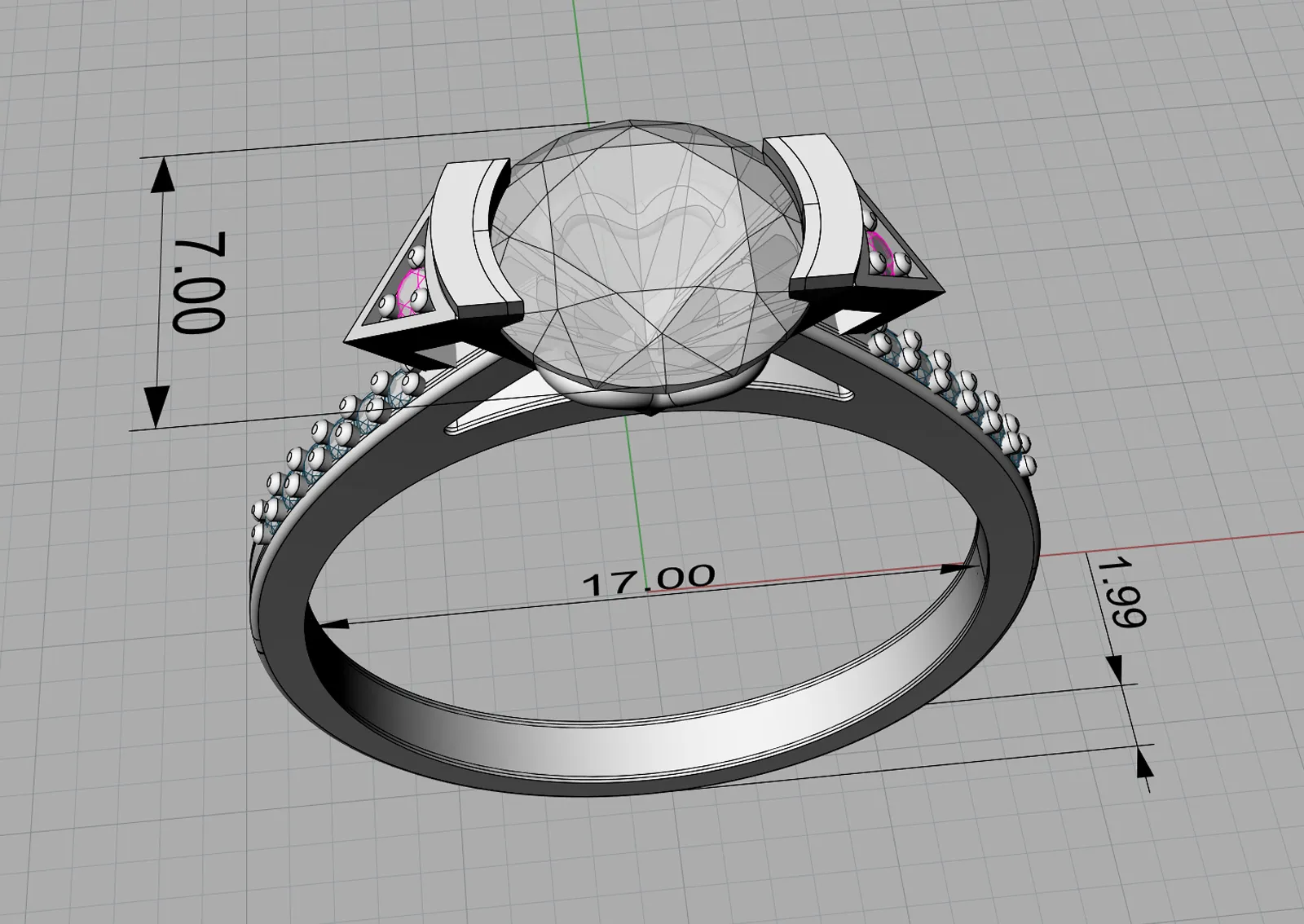
Once the brief and budget have been finalized, the custom jewelry design team will take the concepts and turn them into representative formats. Typically, the format progression will move through the following stages: hand sketching (exploratory and quick) to hand rendering (more detailed) and finally to computer aided design (CAD jewelry design) models where the designs can be turned, flipped, scaled and viewed in digital format. The CAD format provides the ability to accurately scale and proportion the designs and creates files that can be rapidly prototyped using 3D jewelry modeling to create a wax or resin master which can then be cast into the final piece. In addition, during this stage the design team will establish tolerances, determine how to set the stones, and determine how the piece will be manufactured (lost-wax casting, milling, or direct metal printing). Most design development teams will go through a limited amount of revisions prior to approval and will typically provide 1–3 CAD iterations prior to the final approval. By providing the customer with clear images and limiting the number of revisions at this point will improve the predictability of the custom jewelry creation process.
Production and Quality Control: From Master to Finished Piece
After the design has been approved, the custom jewelry production process will follow a logical technical order: prototype (wax/resin) → investment and casting → removal of sprue and rough cleaning → stone setting → hand finishing and polishing. During the production process the workshop will perform multiple levels of quality control: verify that the metal weight matches the specifications, verify that the stone meets the specifications, verify that the piece fits properly, document the process (with photographs) for the customer's record, test the mechanical integrity of the piece (i.e. prongs on rings, etc.).
Most independent studios will indicate that the typical time frame for completing the production of a custom piece of jewelry is approximately 4–10 weeks depending on the complexity of the design and/or if rare or unique materials are needed. However, it is common for complex designs or rare materials to add additional time to the project. To reduce customer uncertainty throughout the process, many workshops provide milestone documentation to the customer (e.g. prototype approval, casting completion, stone setting completion).
Delivery, Documentation, After-Care
Delivery is more than simply handing over the finished piece of jewelry. Delivery includes ensuring that the personalized jewelry meets the original brief (fit, finish, appearance), providing any necessary documentation regarding the gemstones, and providing the customer with after-care instructions. Many custom jewelry buyers of fine jewelry are encouraged to insure their purchases, and many jewelers offer appraisal or certification services to assist with insurance purposes. As well, warranties, complimentary cleanings, and life-long maintenance agreements vary widely among makers and should be discussed and agreed upon prior to making final payment. Lastly, a key aspect of custom fine jewelry is the consideration of the piece of jewelry through its entire lifecycle: issues related to future resizing, resetting, and repairs should be addressed during the initial design phase since these considerations can impact the mount type and ultimately the ease of future intervention.
Closing Observations
The custom jewelry-making process is a collaborative and structured process: defining the problem, establishing budget, creating an evolving design, developing a technically precise method of fabrication, and documenting the transfer of ownership. The process replaces the immediacy and economy of the mass-produced products with the benefits of control, uniqueness, and exactness of materials. Ultimately, the greatest predictors of success for both the client and the practitioner are the clarity of the brief, open communication relative to costs and timelines, and agreed upon milestones at which the design is evaluated and approved. (One example of an established atelier that operates according to these principles is CJD Fine Jewelry, who emphasize documented approvals and client visualizations during the CAD jewelry design phase.)

-Author’s Note-
Benjamin Hartley
I am a jewelry designer & historian. Custom jewelry combines art, emotion, and engineering. All custom pieces are the result of a relationship between the client, the artist/jeweler, and the actual craftsmanship. Luxury should be built upon intentions and details, not on time.
05 Comments

Very well written article. But how much money is it going to cost to have custom jewelry? Every jeweler has a "it depends" answer when asked for pricing. I would appreciate if you could post some real prices/ranges.
Chloe Ramirez

So, as pretty as the process was described, 8-10 weeks seems like an eternity to wait for something that may take less than 1 week to make in many other industries. Is there anyone out there that can create something quickly with the same quality?
Hannah Whitmore

The explanation of CAD & casting were perfect. I model in 3D, so I enjoyed reading how that technology could turn into something emotional and tangible such as jewelry.
Ethan Callahan

I was looking at this website to kill 5 minutes of my day and now I am actually thinking of creating my own cufflinks. Another great way for me to spend money on a new hobby that I probably shouldn't get into.
Ryan Mercer
Leave a Reply
Contact us with any questions or replies — we’re always here to help.
This article touched my heart. I had no idea what went into making custom jewelry. It's not just a bunch of metal and some stones; it's someone's story being translated into gold.
Madison Avery