Unlimited Revisions? What to Expect When Designing Custom Jewelry
Why Does This Question Matter?
Bespoke jewelry is a highly technical yet emotionally charged experience for the client: the client wants to see their dream take form, while the maker must consider time, cost, and manufacturability. Questions such as "how many revisions," "can I make changes later," and "will this affect my timeline" are among the most frequently asked in the U.S. market because the answers directly affect the client's time, budget, and the end product. Defining how many revisions will be allowed prior to the start of the project will eliminate confusion and create a foundation of trust between the client and the jeweler.
Industry Norms — What Do Jewelers Typically Expect? How Will 3D CAD Affect That?
You will notice within the U.S. market two common methods used by the majority of independent bench jewelers and workshop owners. Most expect 1 to 3 CAD rounds to accomplish simple designs, while more complicated designs will need more CAD rounds. Experienced buyers and trade professionals have also reported through forums a similar 1 to 3 CAD round limit as a practical solution for most engagement rings and basic custom designs. However, a large number of custom shops today offer "unlimited revisions" up to the point of production, while the fine print in these agreements often limits what constitutes a revision and what constitutes a new design (i.e. minor adjustments vs. total redesign).
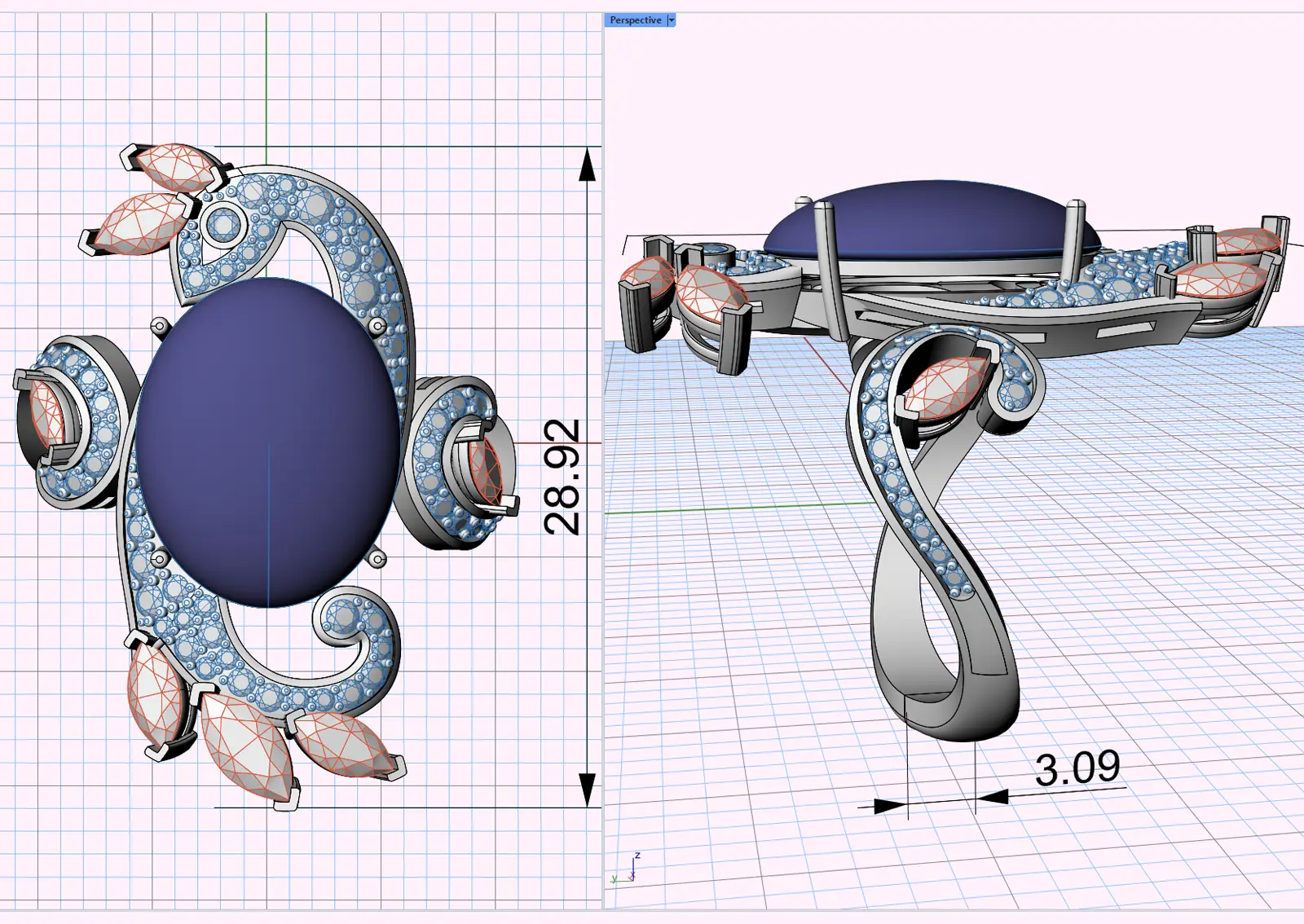
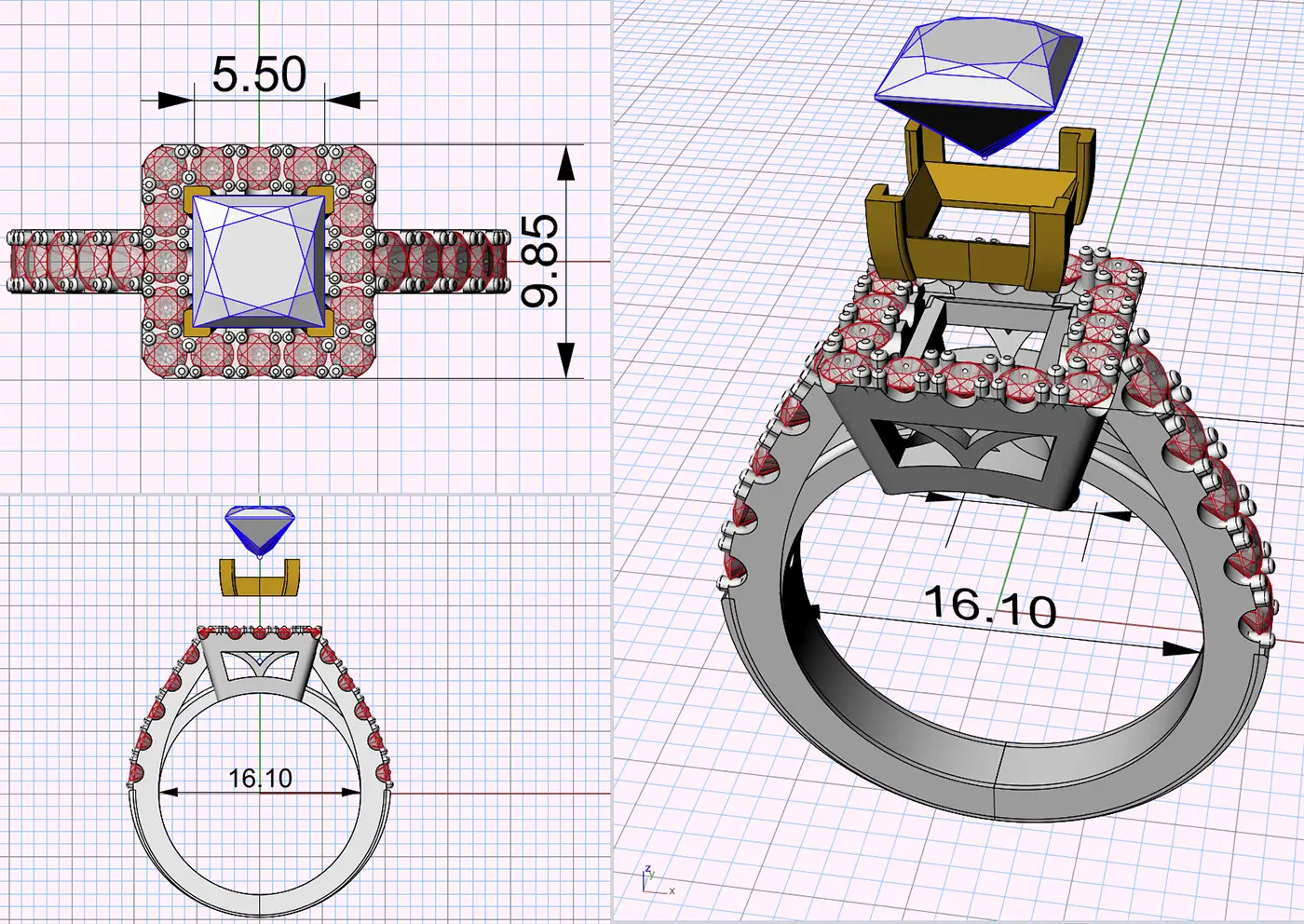
The emergence of 3D CAD and 3D printing has greatly impacted the economics of iteration. With digital modeling and the ability to rapidly produce resin or wax prints of 3D CAD models, designers can visualize and test iterations much quicker than was previously possible with hand-carved wax. However, once the 3D CAD model has been converted into a printed model and subsequently cast, making changes can be extremely materially expensive.
CJD Fine Jewelry's Revisions Policy (Design Stage vs. Production Stage)
CJD Fine Jewelry (which caters to high-end customers who are purchasing customized items) revision policy establishes two distinct periods:
- • Design/3D CAD Phase (Pre-Production): During this phase the client may submit an unlimited number of revisions of the sketches, renders, and the 3D CAD model until the client approves the final design. All of the revisions during this period are included in the client's quote.
- • Production Phase (After Approval): Once the client has approved the design and the model is sent to production (the 3D CAD model is printed, the wax/resin is cast, set, and finished), "critical" changes will be billed to the client. Critical changes refer to changes that significantly alter the structural integrity, the type of materials used, or the manufacturing process itself. Examples of "critical" changes include changing the gold alloy from 14K yellow gold to platinum, modifying the internal construction of a pavé setting, or changing the seat and size of the center stone. Since the production phase requires materials, CNC/printing time, and skilled labor, reversing or reworking the production phase is cost- and time-intensive.
- • Post-Delivery Changes: If the client receives the finished piece or the printed model and decides to modify it, the subsequent work will be considered a new commission (rework or total redesign) and thus will carry a new price based upon the extent of the redo.
By separating the revisions into a "free" phase (design/approval) and a "cost" phase (production/post-approval), CJD Fine Jewelry provides a reasonable balance of collaboration with the client and the realities of the production process.
Smart Client Strategies To Minimize Costly Late Changes
In order to minimize the cost and time associated with revisions and late changes, the client should follow these best practices:
- • Have a strong reference library (photos, proportions, metals, stones, etc.) prior to the first sketch session. By doing so, the initial CAD rounds can focus on proportion and functionality rather than correcting the basic elements.
- • Use the early CAD rounds for major decision-making (shape, setting type, and materials) and use later rounds for fine-tuning (surface detail, prong profile, engraving, etc.).
- • Establish clear milestones in the project: preliminary sketch → CAD render → printed prototype → production. By knowing when each milestone occurs, the client will know when changes become costly.
- • Carefully review virtual and physical proofs. While 3D rendering is a powerful tool, a printed wax or resin prototype can reveal practical issues with fit and height that would not be apparent on screen.
Conclusion — Balancing Creativity And Craft
Revisions are a natural part of the collaborative aspect of bespoke jewelry. Modern CAD and 3D technologies have made thoughtful iteration a quick and affordable reality. Within the industry there are norms regarding the number of CAD rounds expected for most engagement rings and basic custom designs (typically 1–3 rounds). Additionally, some ateliers (such as CJD Fine Jewelry, in the design phase) explicitly state that they allow unlimited revisions prior to production. Practically speaking, the client will encounter a threshold once the metal, tooling, and/or setting work has begun, where the client will incur costs for any changes due to the fact that all of the above consume materials and skilled labor.
For clients who are looking for a one-of-a-kind piece with precision (especially those using clear diamonds and platinum, and anticipating a high level of finish), the most effective approach is to spend the time in the earlier CAD rounds to refine the design, and utilize the prototype to confirm the fit and proportions prior to stating "I approve."
CJD Fine Jewelry can document the project milestones and clearly explain to the client which changes are merely cosmetic and which are critical changes to the production process — thereby saving time and money while allowing for creative flexibility.

-Author’s Note-
Jason Walker
In the world of bespoke jewelry, open communication and defining your expectations and limits during the design stages and revisions prior to approving the final design will allow for maximum creativity while avoiding miscommunication or confusion. This approach will ensure every piece of jewelry created is made from a foundation of collaboration and trust.
04 Comments

"This was a good read, and I had no idea that once casting begins, it could be so costly to make any changes to the original design. Are all changes critical during this time, or are some acceptable for no charge?"
Jessica Moreno

"Thank you for explaining the different stages of creating a custom piece of jewelry and what may incur additional costs, versus what is included in the price of the initial contract. I am planning on having a custom piece of jewelry made with clear diamonds and platinum, and knowing when the costs begin will help me plan and budget accordingly."
Rachel Thompson

"As a client looking for a truly unique/bespoke piece of jewelry, one aspect that stood out to me was the unlimited revisions before approval. However, I would like clarification — Does ‘unlimited’ refer to unlimited size changes (even if they are just slight adjustments)? Or are there certain restrictions and/or limitations that I should be aware of?"
Michael Harrington
Leave a Reply
Contact us with any questions or replies — we’re always here to help.
"I liked how you defined the two stages of creating a custom piece of jewelry — the design stage and the production phase. However, I did want to know — If I have approved the CAD Model and then find a mistake, how soon should I notify the jeweler before I incur additional costs for making changes?"
Emily Watkins