Inside the Pricing of Bespoke Jewelry: From Materials to Craftsmanship
How much does "custom" jewelry cost and how can you explain the variability in your final invoice?
Buyers looking for luxury, quality, authenticity and/or artistic quality in their jewelry purchases will find their answers to this question in how the various components contribute to the overall price of their jewelry. As a high-end bespoke jeweler at CJD Fine Jewelry in Boston, I believe that the best way to look at my pricing is as a transparent compilation of materials, craftsmanship and services rather than just one number.
Market Pricing Ranges – Reference Anchors.
Trade associations and industry guides indicate that the cost of creating custom fine jewelry can vary greatly. A trade guide lists the typical cost of custom work as being between $500–$2,000 for simple pieces. On the other hand, many custom fine jewelers claim that completely custom commissions can easily exceed $10,000.
Therefore, to give you some reference points: Custom work can be found for around $500–$2,000 for simple designs. More expensive gemstone pieces can fall in the $2,000–$10,000 range. And more complex custom commissions, such as those made as heirlooms, can start at $10,000+.
Materials - Metals & Gemstones.
One of the most obvious drivers of cost is the raw material itself. Gold is priced by weight and purity. Higher karat gold (such as 18k vs 14k) has more pure gold and, therefore, carries a premium. Platinum is denser and requires more heavy metal and tooling time. However, market prices for precious metals fluctuate and, in certain cases, platinum may not be significantly more expensive than gold.
Gemstones create even more variability. Top-grade colored stones currently cost anywhere from $1,000–$100,000+ per carat depending on the type, origin, treatment and size of the stone. Diamond pricing is based on the Four C's (cut, carat, clarity, and color) and typically increases exponentially. Each step up in clarity or carat weight often multiplies the cost of a diamond rather than simply increasing the cost. Many US vendors now describe "clear diamonds," which represents a new marketing trend towards selecting diamonds with the highest color grades (representing premium-grade selection).
In many workshops, material loss is factored into the overall cost. This can amount to 3–7% of metals and 5–10% of gemstones lost due to casting, filing, setting and finishing processes. This loss directly contributes to the overall cost of a custom piece.
Craftsmanship, Design Complexity & Labor.
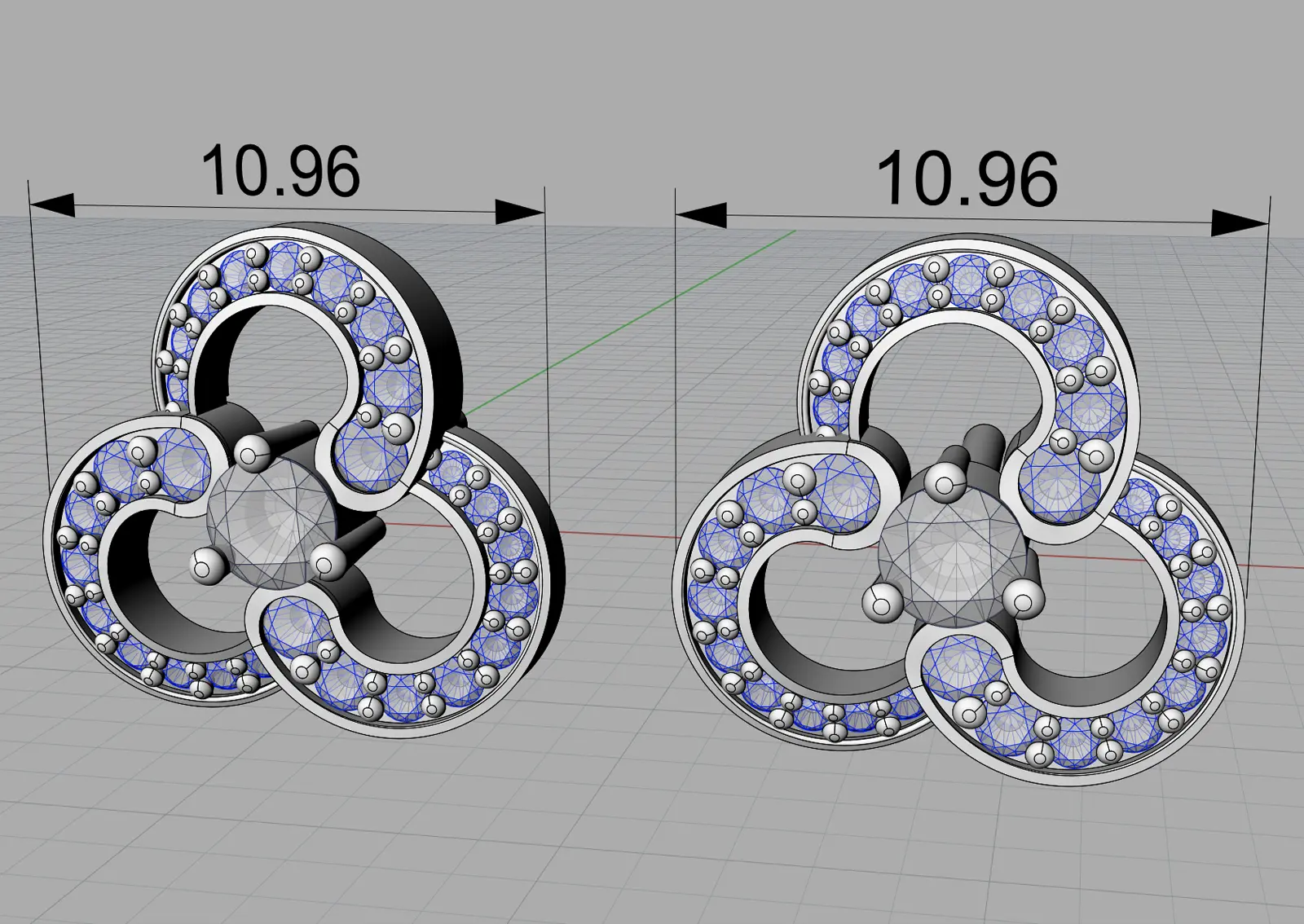
Custom jewelry involves the creation of a design concept, CAD modeling or hand sketching, a prototype (in wax or 3-D printed), the actual production of the piece (casting, stone-setting, etc.), and the final polishing and inspection (quality control). The more complicated the design (i.e., pavé micro-setting, articulated links, hidden mechanisms, engraving), the longer the process takes and the more specialized skills are involved. Therefore, labor becomes a significant cost. Industry commentary indicates that labor costs can represent as much as 20–30% of the overall price of a custom fine jewelry piece. In addition, bench rates for skilled craftsmen in the United States average anywhere from $35–$75+ per hour, depending on the skill level and location of the workshop.
Reputation & Brand Positioning.
As a studio with a high-end reputation, I charge premium fees for both the design and execution of custom fine jewelry pieces. Additionally, workshops located in cities have higher overhead costs that are associated with the final price of the jewelry piece.
Other Costs, Market Fluctuations & Documentation.
In addition to materials and labor costs, all quotes should reflect design/set-up fees, revision/change fees, certification/appraisal fees, insured shipping, insurance during transit, and any rush order surcharges. Sources suggest that an additional 5–15% of your overall budget should be allocated to cover these ancillary costs.
Cost Volatility – Daily Price Fluctuation.
Finally, there is the potential for daily price fluctuations in the cost of raw materials. Metal and gemstone spot prices can change daily. When quoting a customer without including a price-lock provision, the cost of the raw materials used in the production of the jewelry can increase the overall cost of the finished piece. Lab certification (for large, high-value stones) can cost anywhere from $50–$300+ per stone. Certified pieces typically carry a premium of 15–30% in resale or value preservation.
Budget Strategy – Preserving Value.
To budget effectively and preserve the value of your custom jewelry purchase:
- Define a maximum budget and specify which aspects of the jewelry piece are non-negotiable (such as metal grade, stone size/quality, etc.) versus design details or lead time.
- Request a quote that breaks down the individual costs for metals, gemstones, labor, design, certification, shipping/insurance, and revision policy.
- Ask about the number of design revisions allowed and what will happen if you want to change the scope of your project.
- For investment-grade pieces, request lab reports (GIA, AGS, etc.) and record any treatments and the chain-of-custody of the piece.
- Where cost savings are desired, consider options such as fewer carats but higher-quality cuts, or 18K gold instead of platinum if weight is a major contributor to the cost.
- Always confirm the validity period of your quote due to market fluctuations in commodity pricing.
Conclusion
In the US market, the cost of custom jewelry is not arbitrary — it is comprised of transparent components including materials, craftsmanship, service and market conditions. For customers commissioning high-end bespoke jewelry, the more important question is no longer "What is the price?", but "Which factors regarding materials, craftsmanship and documentation ensure that the beauty and financial value of the piece endure over time?" Demand that your supplier provide you with a detailed breakdown of costs, documentation from a reputable laboratory for investment-grade stones, and pay a fair price for luxury-positioned and factually-based pricing.

-Author’s Note-
Lauren Hayes
When I’m working on a custom piece, it’s not just about making it look good. There’s a rhythm to it — a push and pull between the creative and the technical. Once a client sees what actually shapes the price, they start to understand it’s not just about the gold or the stones. It’s about the hours, the choices, and the story that gets built into the piece. That’s the part that lasts.
06 Comments

“Your post really made me understand why custom jewelry tends to be priced higher than off-the-shelf jewelry. I had absolutely no idea that materials lost during processing (losses in metals range from 3-7%, losses in gemstones range from 5-10%) are included in the price of the finished product, which makes complete sense now.”
Brooke Ellington

“I really enjoyed how you provided examples as to how the type and weight of metals (gold, silver, etc.) will impact the final price of your custom jewelry. It's nice to have an understanding of what you're getting in addition to the sparkle of a certain brand.”
Jocelyn Marwood

“The section of your post on obtaining a detailed quote that includes all of the costs associated with your custom jewelry piece (metal, stones, labor, certifications, shipping, etc.) was something that I found particularly useful and a great list of things to ask for if someone is planning to purchase a custom jewelry piece.”
Tara Kensington

“It's interesting how fluctuations in the market value of precious metals and gemstones can cause variations in the final amount due for your custom jewelry order. I never realized that market values could impact the price of custom jewelry to this degree.”
Derek Whitman

“I appreciated how you created a reference point ($10,000+) for heirloom-quality custom jewelry pieces, providing customers with a better understanding of what to expect, rather than simply stating "it depends."
Gavin Harlow
Leave a Reply
Contact us with any questions or replies — we’re always here to help.
“Really loved how you broke down the different cost components of the final price of your jewelry — I was shocked to learn that labor accounts for 20-30% of the final price of your jewelry, which is one of the reasons I am so much more appreciative of custom jewelry knowing what really goes into each piece.”
Ariana Winslow