Beyond Beauty: The Real Value of Certified and Ethically Sourced Gemstones
Why "Are Your Diamonds & Gemstones Certified and Ethically Sourced?" Matters Today
As consumers of custom-made fine jewelry in the U.S. have evolved their expectations of value in their purchases, they have come to regard the aesthetic appeal of gemstones as merely one component of the total value proposition. Provenance, labor practices, and environmental sustainability are now also considered important factors when evaluating a purchase. The certification of a gemstone and the assurance of its ethical sourcing represent two distinct components of this new value paradigm. Certification refers to the documentation of physical attributes of a gemstone through a third-party laboratory report (grading report), whereas ethical sourcing refers to documentation regarding the country of origin, chain of custody, and social and environmental safeguards related to the acquisition and distribution of the gemstone(s).
Certification and Ethical Sourcing Defined — What Does Each Mean?
Certification
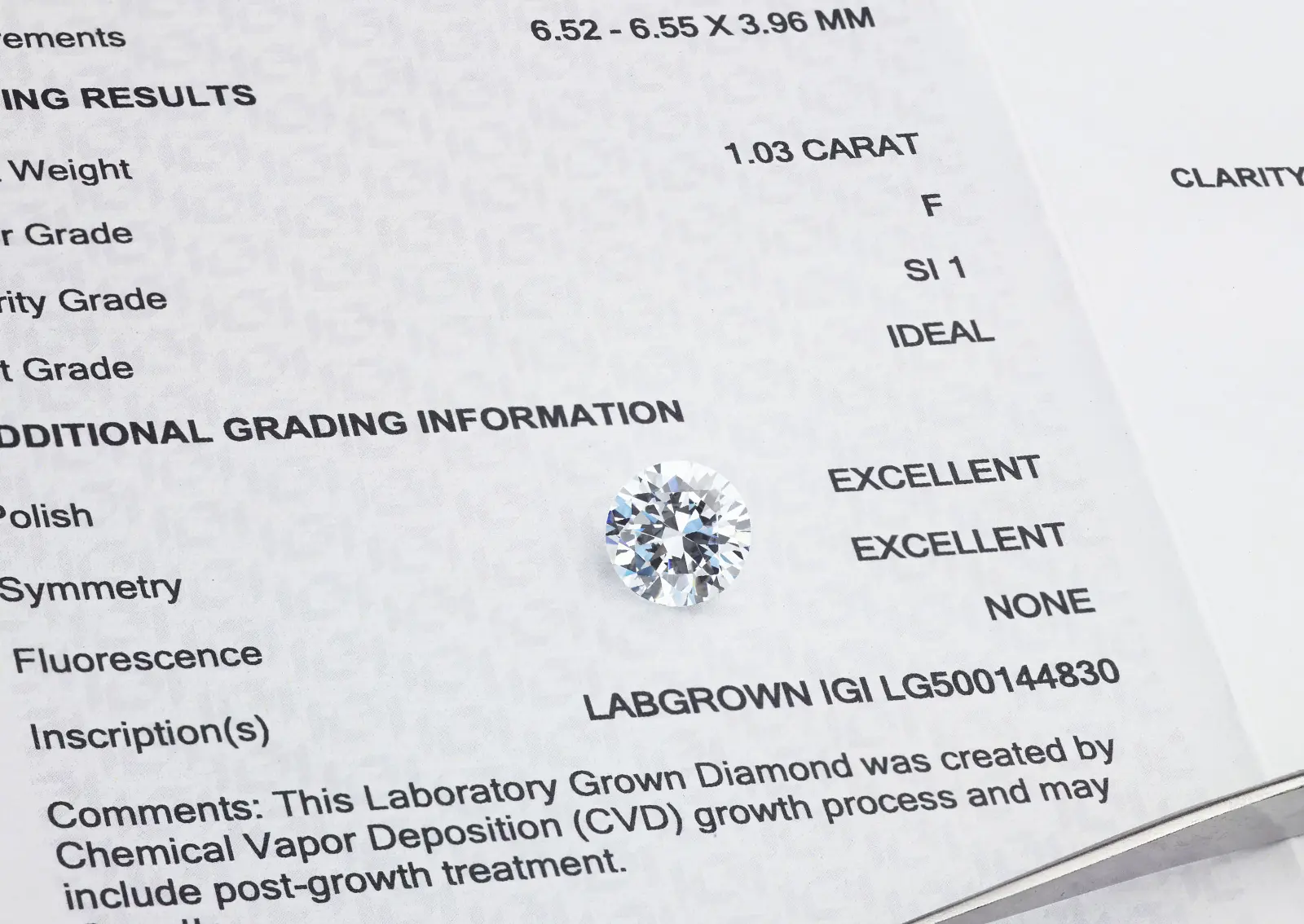
When purchasing fine jewelry, a "certificate" or "grading report" is a laboratory-generated document that describes physical characteristics of a gemstone including color, clarity, carat, cut, and treatment history, if any. Reputable laboratories providing certification reports of gemstones include the GIA (Gemological Institute of America), IGI (International Gemological Institute), and EGL (European Gemological Laboratory), each employing different methods of grading and having varying levels of acceptance in the marketplace. The GIA grading report is recognized as the standard for grading accuracy.
Ethical Sourcing
Ethical sourcing encompasses three primary areas:
- Conflict financing — The Kimberley Process (KP) is an international agreement that certifies the legitimacy of diamond mining and trade and provides an international standard to prevent rebel organizations from selling diamonds to finance civil wars
- Working conditions for miners and manufacturers
- Environmental impact — minimizing negative environmental impacts of mining and manufacturing processes
While the KP ensures that rough diamonds sold internationally do not fund conflict financing, it does not guarantee adherence to social or environmental standards for the broader production process. Therefore, when considering the ethics of a particular gemstone purchase, a consumer seeking full disclosure should obtain proof of origin (documentation) and conduct supplier audits, in addition to KP compliance.
Realities in the Industry and What U.S. Buyers Should Understand
The certification of a gemstone and the assurance of its ethical sourcing intersect with significant practical limitations in the industry. Many small accent stones (commonly used in pavé and micro-settings) are not submitted for independent grading due to cost inefficiency and logistical challenges associated with obtaining laboratory certifications for stones of very small carat weights. The typical minimum size for formal laboratory reporting often begins at a carat weight greater than the small fractions of 1.0–2.5 mm, which represents the size range of most small accent stones. Consequently, the lack of individual certificates for small accent stones in fine jewelry settings represents a common industry practice rather than an indication of unethical sourcing practices.
Additionally, while there is evidence of consumer demand for transparency and traceability in the sourcing of materials for fine jewelry purchases, this demand is inconsistent in terms of translating into increased willingness to pay. However, increased transparency helps build trust among premium fine jewelry consumers.
Operationalizing Standards — CJD Fine Jewelry and Comparable Premium Makers
CJD Fine Jewelry utilizes a bespoke practice model for creating high-end fine jewelry pieces. For the central and largest accent stones within each setting, CJD Fine Jewelry will either issue a credible certificate generated by a reputable laboratory (GIA, IGI, EGL) or will generate the certificate itself based on independent testing and evaluation.
For small stones: Typically, small accent stones (roughly 1.0–2.5 mm) are not individually certified; instead, the vendor generates batch documentation, maintains internal quality control measures, and issues a provenance statement for each stone.
Ethical standards: From the standpoint of the jeweler, all stones are purchased from vendors who maintain records documenting the chain of custody of the stones and demonstrate KP compliance for diamonds mined and traded internationally. Additionally, where possible, CJD Fine Jewelry will request the vendor to provide additional documentation demonstrating the ethical sourcing of the stones, in addition to maintaining internal quality and ethical controls for the entire piece.
This dual approach allows for verification of the major gemstones while ensuring that the entire fine jewelry piece meets a consistent level of ethical standards.
Verification, Buyer Checklist, and Long-Term Implications
To ensure that an informed decision is made about purchasing premium custom fine jewelry, a buyer should require the following documentation from the jeweler:
- Principal stone certification — A copy of the certificate report and report number for the principal stone, along with verification method
- Provenance documentation — Documentation from the supplier or the invoice that references Kimberley Process compliance for rough diamonds, or similar provenance information for colored gemstones
- Small stones disclosure — Written statements regarding the sourcing of small stones, along with the internal quality and/or ethical controls applied
The inclusion of certificates in the sale of fine jewelry enables the appraiser and insurer to accurately determine the value of the item and also enhances resale confidence. The provision of provenance and a transparent supply chain contributes to long-term confidence and resale value in a fine jewelry piece. Therefore, the combination of certified diamonds, along with the ability to demonstrate the ethical sourcing of the stones, creates both technical and narrative value for a fine jewelry piece intended to be passed down through generations.
Appendix — Brief FAQs
Q: Why Are Not All Small Stones Certified?
Certification is limited by the costs and logistics associated with submitting smaller stones to a laboratory for grading. Laboratories usually only grade stones with sufficient carat weight to be measured and graded. Suppliers use batch documentation for smaller melee stones.
Q: How Can I Verify a Certificate?
Request the laboratory report number and verify it independently using the laboratory's website (e.g., GIA online report check).

-Author’s Note-
Jason Walker
To me as a jeweler, I feel that the most important factor in creating a luxury item is building trust — trust in the origin of the materials (gemstones), the authenticity of those materials, and the craftsmanship of each piece of jewelry created by the jeweler.
At CJD Fine Jewelry, we’re committed to making sure both the beauty of the piece shines and the integrity of that piece does as well — through transparency.
07 Comments

“That was a really interesting point you made regarding smaller accent stones not having certifications. If the size of an accent stone is less than ~2.5 mm, should I ask my jeweler about obtaining batch documentation for these smaller stones?”
Cassidy Parker

“When you say “ethically sourced gemstones,” how can a consumer confirm whether a vendor meets certain standards concerning worker conditions and environmental impact? Are there any trusted standards outside of KP that I could reference?”
Kendall Whitman
“Thank you for being so transparent. However, what should I do if a jeweler says they issue their own certificate? How do I assess this compared to a GIA or IGI report?”
Emerson Vale

“I found your distinction between certification and ethically sourced gemstones really helpful. Can you tell me — are lab-created diamonds handled differently when it comes to provenance and the supply chain?”
Grayson Finch

“For someone seeking premium custom jewelry, the checklist you provided is very useful. However, I have one quick follow-up — how often do vendors actually provide a written statement of provenance for their smaller stones?”
Holden Mercer
“Thank you for clarifying that smaller stones may not have individual certificates. Still, am I at risk because of the lack of certification for my pavé-set micro stones, or is this common in the industry?”
Sawyer Bennett
Leave a Reply
Contact us with any questions or replies — we’re always here to help.
“Great article! I’ve been curious about the “certification” of custom fine jewelry for years... does it affect resale value, or is it mostly for peace of mind?”
Delaney Rhodes