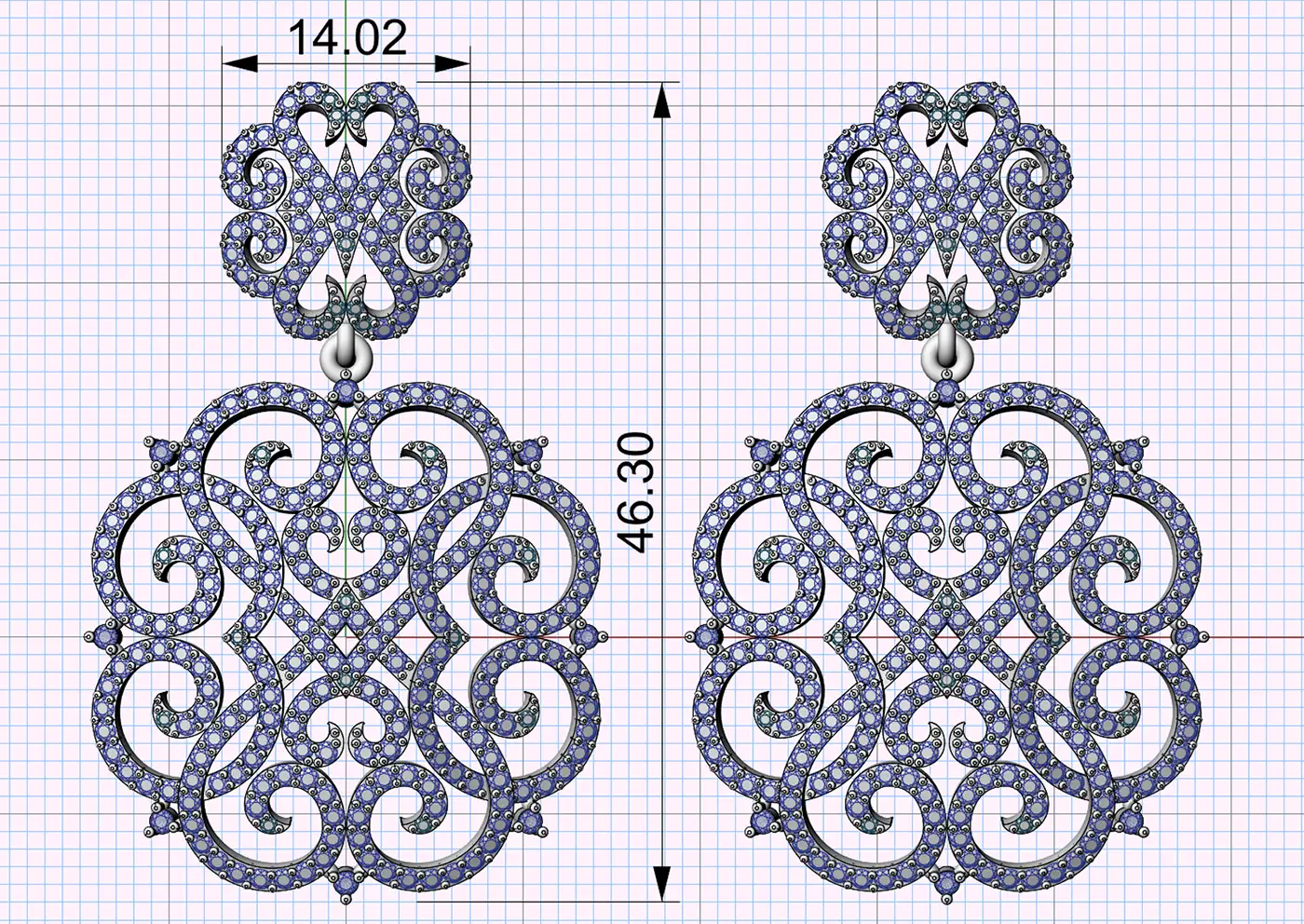
The Role of CAD and 3D Modeling in Bespoke Jewelry Creation
Introduction: Framing The Question
The question “Does your custom jewelry design involve 3D modeling?” actually has multiple implications for potential customers:
- • Will the actual item look like the pictures I have seen?
- • How many iterations will we need to go through?
- • Can I be confident that the fit, finish, and materials I choose will all work out well?
- • Are there new costs associated with the use of digital technology?
- • Do these new technologies affect sustainability?
To answer all of these questions, one needs to look at both the tools (CAD, 3D printers, CNC machines) and their tangible impact on creating a unique, high-end custom piece of jewelry. At CJD Fine Jewelry, our custom designs are powered by precision 3D modeling and time-honored handcrafting. CJD Fine Jewelry utilizes the entire digital workflow — CAD modeling, photorealistic rendering, 3D printing and CNC machining — and views digital tools as a means to provide control, not to replace traditional craftsmanship.
What does “3D modeling” and the digital workflow mean in real terms?
With respect to bespoke jewelry, “3D modeling” represents the creation of a highly detailed and precise computer model (CAD), which is a description of the geometry, tolerances and placement of stones. The CAD file can be used to generate numerous secondary outputs, including:
- • High-resolution photorealistic images for the client's review.
- • Prototypes or finished parts via additive manufacturing (wax or metal 3D printing).
- • Components requiring machine tolerances via CNC machining.
Additionally, the CAD file acts as a permanent, editable record of the design. Therefore, the CAD model can be used as a basis for creating a sequence of related documents for each step in the design process: from initial sketch to CAD model, then to render, prototype, and finally to finishing. The primary benefit of using the digital file is that the design can move between these various states quickly and easily with frequent opportunities for client review and approval. In addition, rapid prototyping and the ability to reuse files are central to producing bespoke items today.
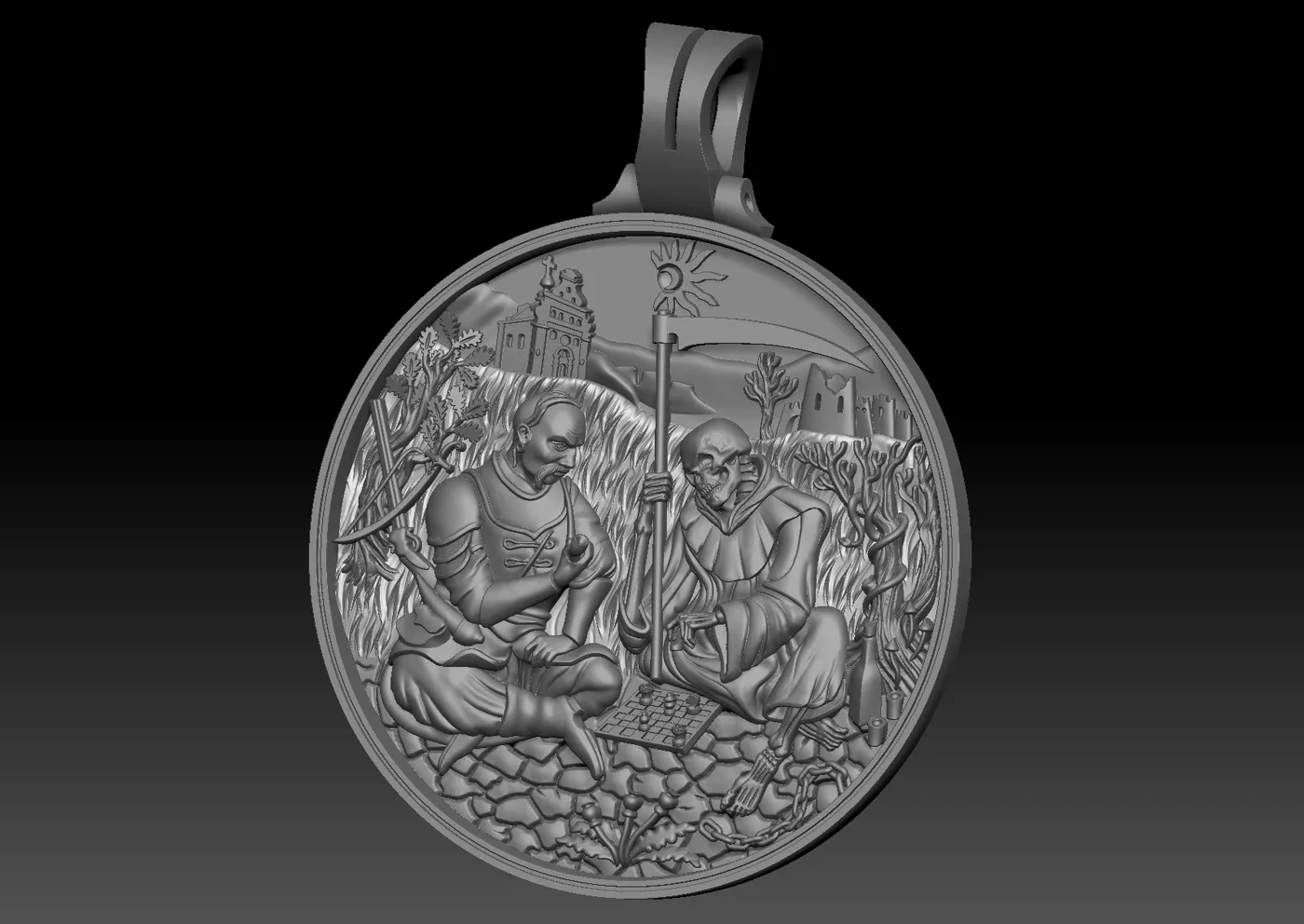
Benefits to Clients: Predictability, Speed of Iteration, Form Language
The two main benefits to the client are predictability and speed of iteration. The CAD model contains exact geometric information and internal clearance information, which significantly decreases the likelihood of problems with fit at the final assembly stage. In addition, the ability to create rapid 3D prototypes greatly compresses the iteration time; designs that previously would have taken weeks to validate by hand carving and/or making mock-ups can now be tested in a matter of days. This faster iteration time provides a significant decrease in the cost of design correction and allows designers to experiment with more complex forms — e.g., lattices, undercuts, sculptural negative space — that are difficult or impossible to create by hand. There is growing demand for custom jewelry created using 3D-printed and digitally-enabled techniques; the growth in technical capabilities and client desire for customized products is driving this trend.
Cost, Accuracy of Renders and Sustainability Concerns
Commonly, clients fear that the use of digital technology will either inflate the cost of creating the product or produce inaccurate representations of the final product. However, high-quality photorealistic renders function as decision-making tools; they accurately represent metal types, stone cuts, and surface finishes and provide the client with images that closely resemble the final product. While no image produced by a computer is completely accurate — e.g., the color of gems and the subtle nuances of hand polish — they do significantly reduce the likelihood of customer dissatisfaction and costly redesign or repair. Generating a high-quality photorealistic render does increase the cost of the initial design phase, however, this increased cost is typically balanced by reduced costs for subsequent phases of the process — i.e., fewer physical prototypes and fewer revisions during the finishing phase. Additive manufacturing and current casting workflows can also reduce material waste: building only the necessary shape or using wax prints for lost-wax casting significantly reduces the amount of scrap generated when compared to the large amounts of waste generated by the subtractive machining process. These sustainability gains are part of an increasingly evident trend in the jewelry industry towards on-demand, low-waste production.
Practical Expectations and Common Client Questions
- How many revisions are typical? Typical workflows allow for multiple iterations of the CAD file and corresponding photorealistic renderings prior to prototyping; the actual number of iterations will depend upon the contractual agreement between the designer/client and the complexity of the design, but the digital nature of the process provides the opportunity to make multiple iterations at a relatively low cost. CJD Fine Jewelry provides unlimited design revisions at no extra charge.
- Are the photorealistic renders very accurate? Yes, they are very accurate with regard to form and relative reflectance; however, it is possible that some of the finer details — e.g., the exact color of a gemstone and the micro-texture of a hand polish — may still require a physical inspection to verify accuracy.
- Does 3D design always lower the price of a piece of jewelry? No, it may not; however, the use of digital design techniques will almost certainly lower the total project risk and the likelihood of having to pay for expensive corrective work after production.
- What about the value of artisanal craftsmanship? The digital techniques utilized by designers should be viewed as enablers of their own creativity, rather than substitutes for traditional craftsmanship. After the design has been finalized using digital tools, the designer will utilize hand finishing, stone-setting and quality control to ensure the final product meets the tactile standards that exist for high-end, bespoke jewelry.
How The Workflow Works At A High-End Studio (A Brief Example)
A representative example of a workflow employed by high-end studios such as CJD Fine Jewelry includes a series of steps:
- Client consultation and measurement.
- CAD and parametric adjustment.
- Photorealistic render for client approval.
- 3D printed wax or resin prototype for fit checks and proportion verification.
- Lost-wax casting from the printed pattern, direct metal printing for specific elements, and CNC machining where tight tolerances are required.
Final assembly, hand-polishing and stone-setting complete the piece. The resulting piece is a hybrid: digitally validated geometry that is ultimately finished by hand. This balance of the repeatable and precise capabilities of machines and the creative judgment of the artisan provides the ultimate solution for clients seeking to commission a luxury custom piece of jewelry.

-Author’s Note-
Jason Walker
For us as designers, true luxury is found where digital precision meets human intuition. CAD and 3D modeling do not eliminate craftsmanship, they enhance it. Each bespoke piece created using these technologies will be crafted with clarity, confidence and purpose.
05 Comments

"Great job explaining the whole process from rendering to prototype. It makes the custom route seem so much easier to get through now that I understand that potential issues with fit are caught before they cost money."
Madison Crowell

"I loved how you said that digital tools support the craftmenship, rather than replace it. I have heard many people refer to 3D modeling as 'machine-made' jewelry. This article shows that although technology has improved the design and manufacturing process, there is still a significant amount of handmade craftsmanship involved. In my opinion, this is the best of both worlds. Precision combined with artistry."
Abigail Torres

"Quick Question... When you say that the renderings are extremely accurate, how accurate are we talking? Would the metal reflections, and stone angles of the render match the actual finished ring nearly identically, or just close enough to gain approval?"
Ryan Dempsey

"I had a lot of misconception regarding 3D printing in jewelry, and this cleared up a lot of them. I always assumed that 3D printing was going to add extra expense to the creation process. However, the fact that there are fewer prototypes and fewer corrections makes a lot of sense, and explains why high-end studios are using it."
Brandon Keller
Leave a Reply
Contact us with any questions or replies — we’re always here to help.
"Helpful explanation of the CAD flow. I did not know designers can use the same file over again. Does that mean future designs become less expensive or take less time for repeat clients?"
Harper McKinley