Where Your Custom Jewelry Is Made — and Why It Matters
What Does "Your Own Workshop" Really Mean?
The location of your custom-made jewelry is important. Where something is made — whether inside your own workshop or by an outside partner — defines which party has ultimate accountability for the product's fit, finish, and authenticity. It also impacts how quickly you can get your item, what the warranty covers, and if the certifying body can be contacted for verification.
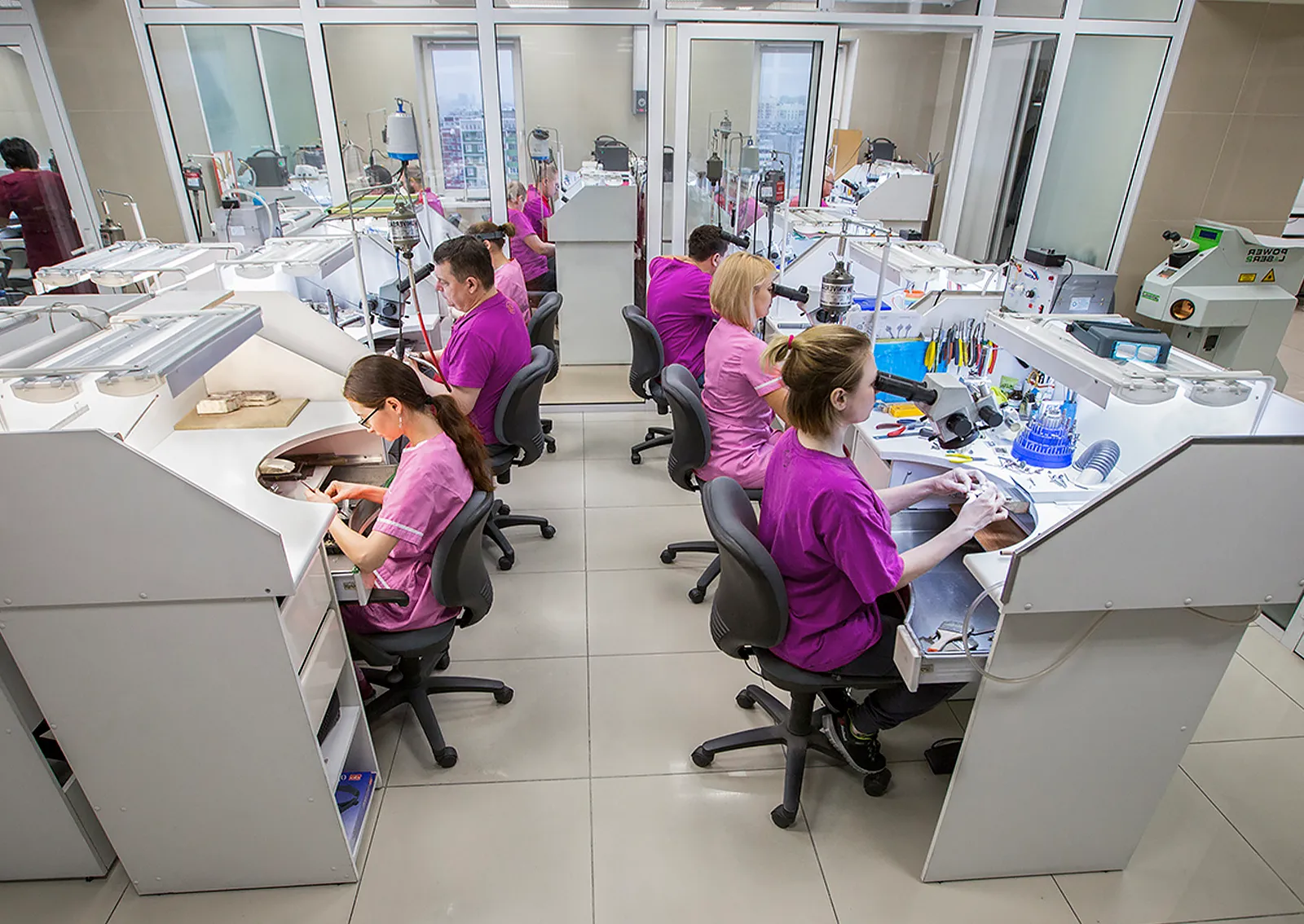
CJD Fine Jewelry produces all items in-house. We document the source of materials and the making process at key points throughout.
Why Clients Ask About Location
This question is generally asked in the United States for three practical reasons: objective grading, responsible sourcing, and accountability for repairs or modifications.
Independent laboratory reports issued by third-party organizations like the Gemological Institute of America (GIA) provide clients with standard, verifiable information regarding a diamond's characteristics and authenticity and are commonly regarded as the foundation of consumer trust in the industry.
Transparency on origin is also expected. Documentation proving that a diamond complies with the Kimberley Process — a system created to prevent conflict diamonds — or records showing its country of origin is the minimum requirement for responsible sourcing, although the industry recognizes there are limitations to the system.
Warranty and repair processes are easier to follow when a manufacturer maintains sole possession of the tooling and record-keeping data related to the item. The certainty of knowing who manufactured an item and how it was created translates into long-term confidence in the item beyond the initial sale.
What In-House Production Involves
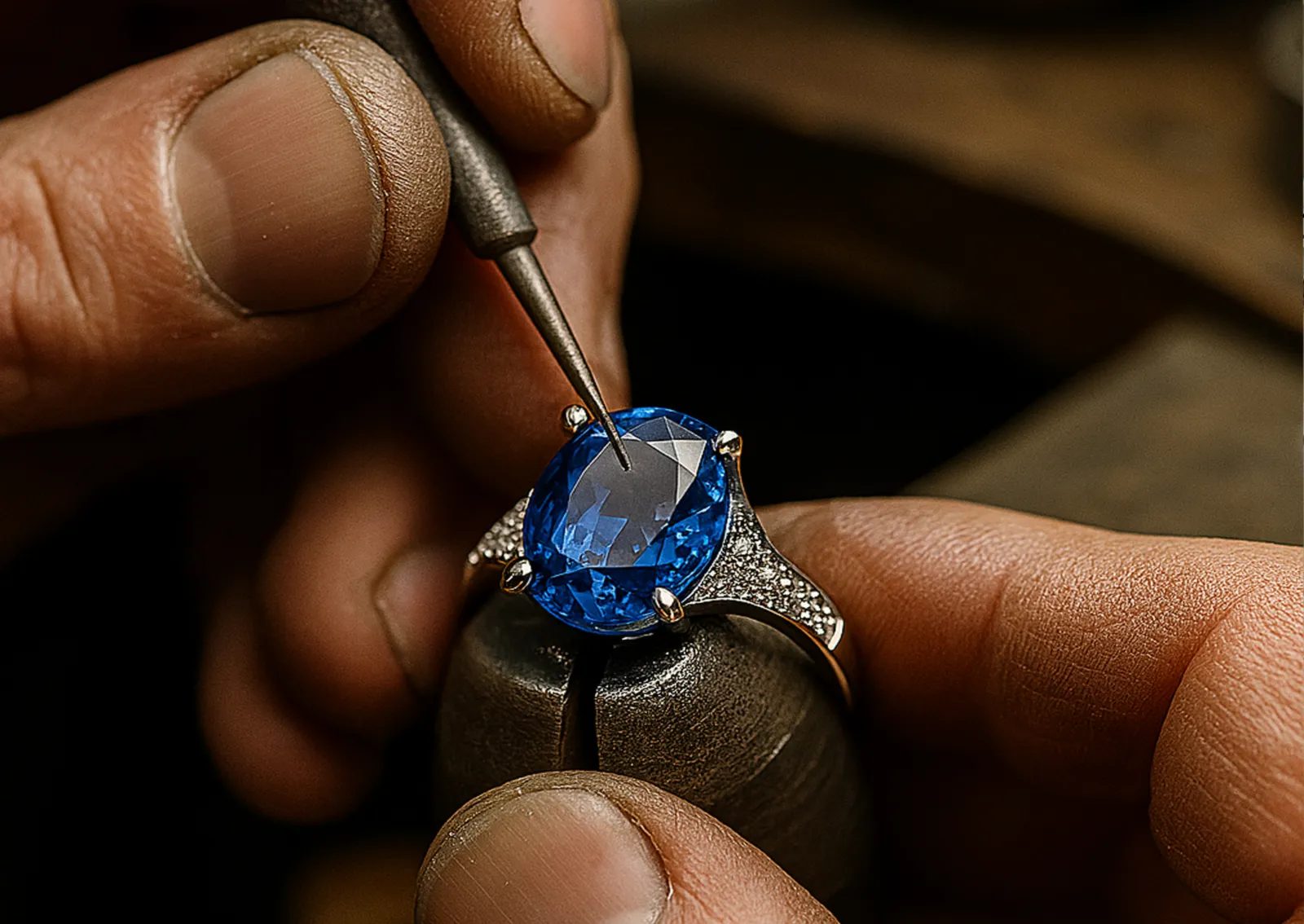
To fine jewelry manufacturers, "your own workshop" refers to the fact that the maker of the jewelry is performing the majority of the transformations needed to create the piece in-house. Examples include: CAD design and review, creation of prototypes (via 3-D printing or wax), casting or fabrication, hand-finishing, stone-setting, and final QC.
The ability to retain these processes in one facility allows for instant feedback, quicker problem resolution, and a single point of responsibility for the quality of the craftsmanship.
While maintaining in-house production requires significant investments in both equipment and skilled employees, the benefits to process control and the speed of corrective action are greater than using multiple vendors to supply components of a piece. Multiple studies have demonstrated that controlling the entire production process — especially when producing customized, low-volume, high-value products — results in tangible advantages over a multi-supplier chain. This includes less delay in delivery, better communication between parties, and a finished piece that matches the original concept precisely.
More and more customers are now searching for "custom jewelry made in-house," realizing this is an indicator of the authenticity of the jewelry, the level of craftsmanship involved, and the ability to control the artistry of the design. Customers recognize when their rings have been entirely created within one workshop (i.e., design through polishing), versus having pieces transferred back and forth among multiple outside vendors; therefore, each custom piece has its own unique and emotional story that cannot be measured by the carat weight or clarity rating of the stone.
How CJD Fine Jewelry's In-House Model Ensures Accountability
CJD obtains gemstones and precious metals from approved suppliers and auction houses and pairs them with any existing documentation. Each phase of the process, from CAD and prototype to final polish, is accomplished and inspected in-house at CJD. This model enables CJD to affix grading reports or summary documents of origin to the completed piece, to allow client review during the prototype phase, and to establish unified warranty terms that clearly indicate the scope of warranty coverage for the craftsmanship performed in-house.
Since the same team creates a piece from inception to completion, CJD can definitively answer factual questions about which employee performed which task and provide supporting documentation requested by buyers. The continuity of authorship (one creator from conception to signature) represents the integrity of each piece.
Steps and Questions
The typical flow of a commissioned piece includes: consultation and specifications → CAD and prototype review → casting or fabrication → hand-finishing and setting → final inspection and documentation.
Timelines for in-house production for similar types of projects demonstrate how structured approval and internal QC can significantly shorten the production cycle without compromising client involvement.
Prior to purchasing, clients should ask for:
- visible certificates or laboratory reports (e.g., GIA)
- a detailed production schedule with milestones
- identification of which individual will accomplish each step of the process and where
- written warranty and after-care terms
Asking these questions is the best method of distinguishing a retailer selling products that were produced by someone else vs. a manufacturer that produces jewelry in-house.
Demand for sustainable, conflict-free, and transparently sourced jewelry is growing — and becoming a norm. For buyers of one-of-a-kind, handmade pieces, the location of manufacture directly correlates with the buyer's ability to verify control over the craftsmanship, the provenance, and the ability to pursue warranty and repair claims. CJD Fine Jewelry's in-house manufacturing model places all three elements in a single accountable person — and transforms a manufacturing decision into a lasting representation of trust.

-Author’s Note-
Lauren Hayes
It is transparently valuable today to understand where and how your jewelry is produced as well as its physical attributes. We at CJD Fine Jewelry see our in-house manufacturing as both an approach and an expression of our commitment to authenticity, traceability, and craftsmanship by hand.
05 Comments

"Thanks so much! When you're going to spend a few thousand dollars on a custom-made item, you should have some peace of mind knowing exactly who made it. A shop that produces from beginning to end has a feel of safety and honesty — versus sending parts of it out to other workshops."
Naomi Prescott

"That point about keeping the records and the tools with the person who made it really hit home — it allows for repairs over time. It's one of those details you don't even think about until something breaks."
Eleanor Voss

"If a ring is made entirely in-house, does that typically result in quicker repair times? I've had some pretty terrible experiences with rings taking months to fix because nobody could find out who initially set the stone. Curious about how smaller shops manage this."
Lucas Pennington

"I like the idea of one artist being responsible for the entire process — it feels emotionally connected rather than just technical. However, yes — how can a buyer prove or determine that a jeweler is producing everything in-house and not through partners?"
Owen Carlisle
Leave a Reply
Contact us with any questions or replies — we’re always here to help.
"I love how this clearly defines what 'in house' truly means. I thought it was simply a marketing term, but now I get why the quality control would be better since it all happens in one place."
Tessa Marlowe