
Expert Guide to Cleaning and Maintaining Handcrafted Jewelry
Why Is It Important To Take Good Care Of Your Personal, Handcrafted Jewelry?
Handcrafted jewelry from CJD Fine Jewelry is not only a unique, handmade piece of art — it's also a finely tuned machine consisting of prongs, bezels, and settings that hold stones made to precision specifications which could be affected by corrosion, abrasive wear from daily use, chemicals, dirt, and oils/salt residue. Grime and oil residue from the body can greatly impair the optical characteristics (brilliance, luster) of the stones and cause micro-abrasion at the points of highest stress on the stones and metals. In the case of your personal, handcrafted, high-value jewelry, using conservative, science-backed home maintenance — as recommended by CJD Fine Jewelry — will help prevent long-term damage and delay the need for expensive repairs.
Knowing how to clean your jewelry at home helps protect your investment.
Safe Defaults: The Least Risky Home Cleaning Methods for Most Metals and Stones
For almost all precious metals (gold, platinum) and for hard, untreated stones (diamonds, rubies, sapphires), the safest way to clean your jewelry at home is with a simple "Soap + Soft Brush + Rinse" method. Use warm water and add a small amount of mild dish soap. Let your jewelry soak for 5–15 minutes depending on the level of dirt. Gently agitate your jewelry with a soft, new-bristled brush. After agitation, rinse your jewelry under running warm water and collect it in a bowl (never run your jewelry down a drain). Finally, dry your jewelry with a lint-free cloth or microfiber.
This method — widely approved by CJD Fine Jewelry — will safely remove dirt, body oils, and other particulate matter from your jewelry and is considered the best method for cleaning jewelry at home for solid metals and hard stones.
However, this method is not suitable for all types of jewelry. Porous organic materials such as cultured pearls, opals, turquoise, amber, and fracture-filled or dyed gems can be damaged through submersion, ultrasonic cavitation, and/or steam cleaning. Cultured pearls and opals should always be cleaned with a soft, damp cloth and should never be placed in an ultrasonic or steam cleaner. Strung pearls require complete drying and may require occasional restringing due to the weakening effect of moisture and detergents on silk threads.
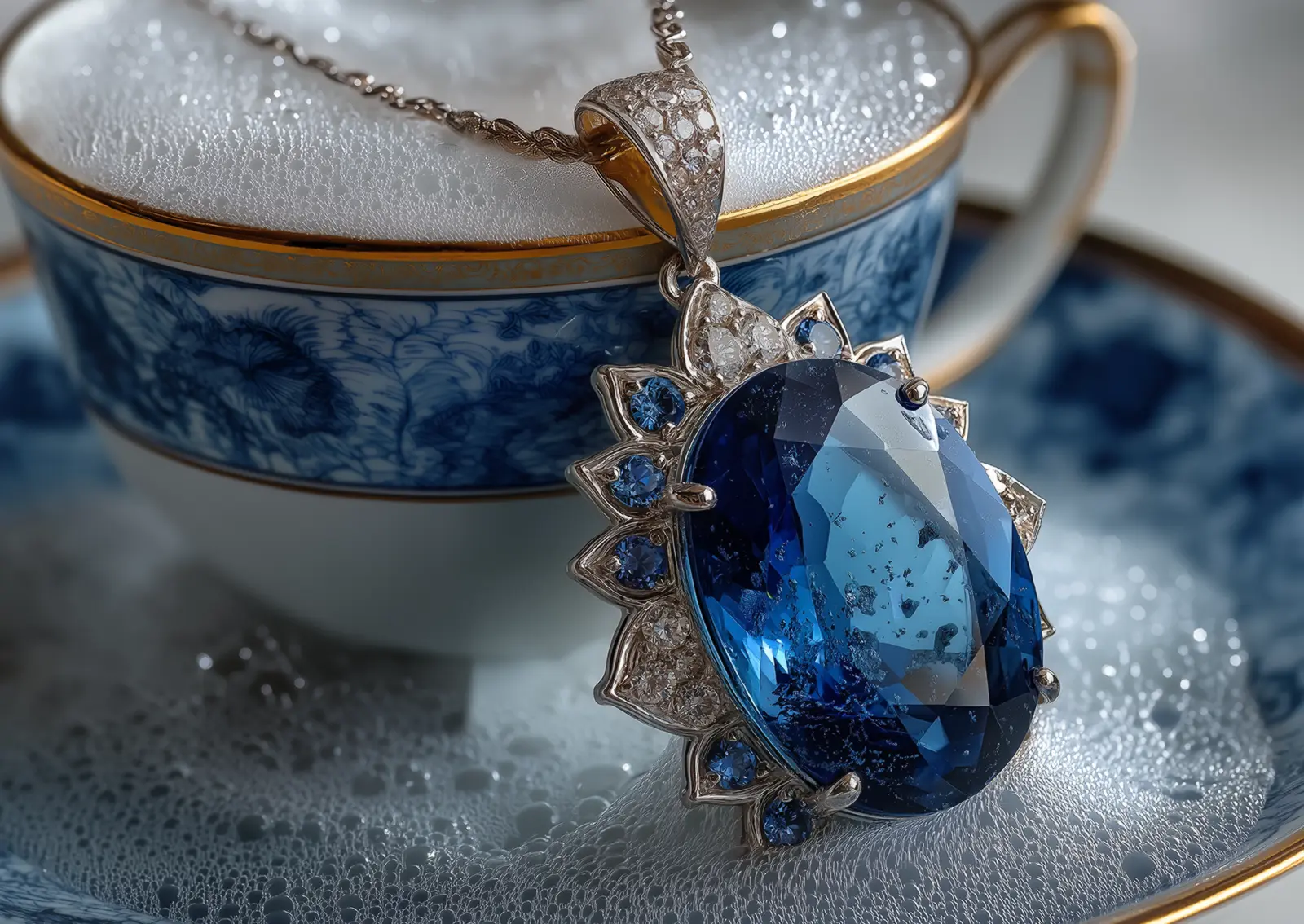
Benefits and Risks of Ultrasonic and Steam Cleaning and Common Myths
Both ultrasonic and steam cleaners have benefits in removing embedded debris and dirt that manual cleaning cannot reach. However, each of these cleaning methods has its own set of risks, including vibration loosening or displacing stones, heat or pressure causing deformation, delamination, or other damage to sensitive or fractured gems. Therefore, experts at CJD Fine Jewelry recommend verifying the type of stone, treatment history, and security of the setting prior to any mechanical cleaning process.
Many delicate and treated stones should be avoided during either ultrasonic or steam cleaning. Similarly, common household cleaning "hacks" (e.g., abrasive toothpaste, undiluted acid such as vinegar or lemon juice, baking soda paste) have the potential for causing micro-scratches and leaving residues that can remain on the surface of your jewelry. Therefore, these "hacks" should not replace your conservative cleaning protocols for high-end jewelry.
Habits, Storage, and How Often to Have Your Jewelry Professionally Serviced
Performing daily habits helps maintain the integrity of your jewelry. These habits include wiping your jewelry clean with a microfiber cloth after wearing, removing your jewelry while swimming, showering, working out, or applying lotion or perfume. Store your jewelry separately in soft pouches or in compartmentalized boxes to prevent scratching and tangling.
Check your prongs and settings visually once every month. If you perceive any looseness, discoloration, or visible cracking, contact a professional immediately.
For custom-made, high-value pieces, plan to have them professionally serviced at least annually (inspections, tightening, professional cleaning/polishing). Many ateliers, including CJD Fine Jewelry, provide atelier services for a portion of the cost of making your custom jewelry, and some even offer complimentary professional cleaning and inspections during the warranty period.
If your piece was created by the maker, take advantage of complimentary professional cleaning and inspection offered within the first year under warranty to ensure you receive both conservation and a technical review of your piece.
Home Maintenance Checklist and Final Recommendations
Jewelry maintenance checklist:
- Wipe after wear;
- Monthly mild soap-and-brush clean for hard stones;
- Never use ultrasonic or steam cleaning for pearls, opals, or porous gems;
- Avoid abrasive household cleaning "hacks";
- Store your jewelry separately, and keep silver in a low-humidity environment or anti-tarnish packaging;
- Schedule an annual professional inspection for your custom-made, high-value jewelry.
Conservative home care — regular gentle cleaning, proper storage, and periodic inspections — maintains the optical and structural integrity of your jewelry. When you're unsure about the type of stone, treatment, or security of the setting on your jewelry, seek professional jewelry cleaning and inspection from CJD Fine Jewelry to avoid permanent damage to your handcrafted, high-value jewelry.
For lasting brilliance and security, trust only professional jewelry cleaning for your custom-made pieces.

-Author’s Note-
Benjamin Hartley
Careful maintenance changes how you view your handmade jewelry - it is no longer just an item to be worn, but an heirloom that maintains its brilliance, integrity, and emotional significance for generations to come. By following the above guidelines, your CJD Fine Jewelry item will endure.
07 Comments

“I've cleaned my jewelry with baking soda for years... wow. I never realized it could scratch gold so badly. Lesson learned the hard way.”
Zoe Parker

“Quick question — if pearls cannot be treated to ultrasonic cleaning, would the same gentle soap and brush method be safe, or should I only dry wipe them?”
Mia Brooks
“This makes me think differently about how I take care of my engagement ring. I'm always wearing it whether I am working out, etc., that is probably why it looks foggy. I love how detailed this article was in regards to the different actual methods for caring for your jewelry, especially that checklist at the end!”
Isla Watson

“Jewelry care was never this scientific. Micro abrasion sounds like something I would learn in school. I appreciate the craftsmanship and engineering that goes into making each piece of handcrafted jewelry.”
Liam Foster

“If steam and ultrasonic cleaners both have their own set of potential dangers, then what are the benefits to having a cleaner like this, since I thought they were considered professional grade and therefore completely safe?”
Noah Kennedy
“I like that CJD uses science to back up the maintenance recommendations instead of using common 'hacks' found online. I ruined one of my rings once using vinegar and boy did that hurt. This will definitely be saved to my bookmarks.”
Lucas Reed
Leave a Reply
Contact us with any questions or replies — we’re always here to help.
“Whoa, I had no idea body oils could actually dull diamonds. Gross but really good to know!”
Ava Sanders